Chapter 2 · Nothing marked
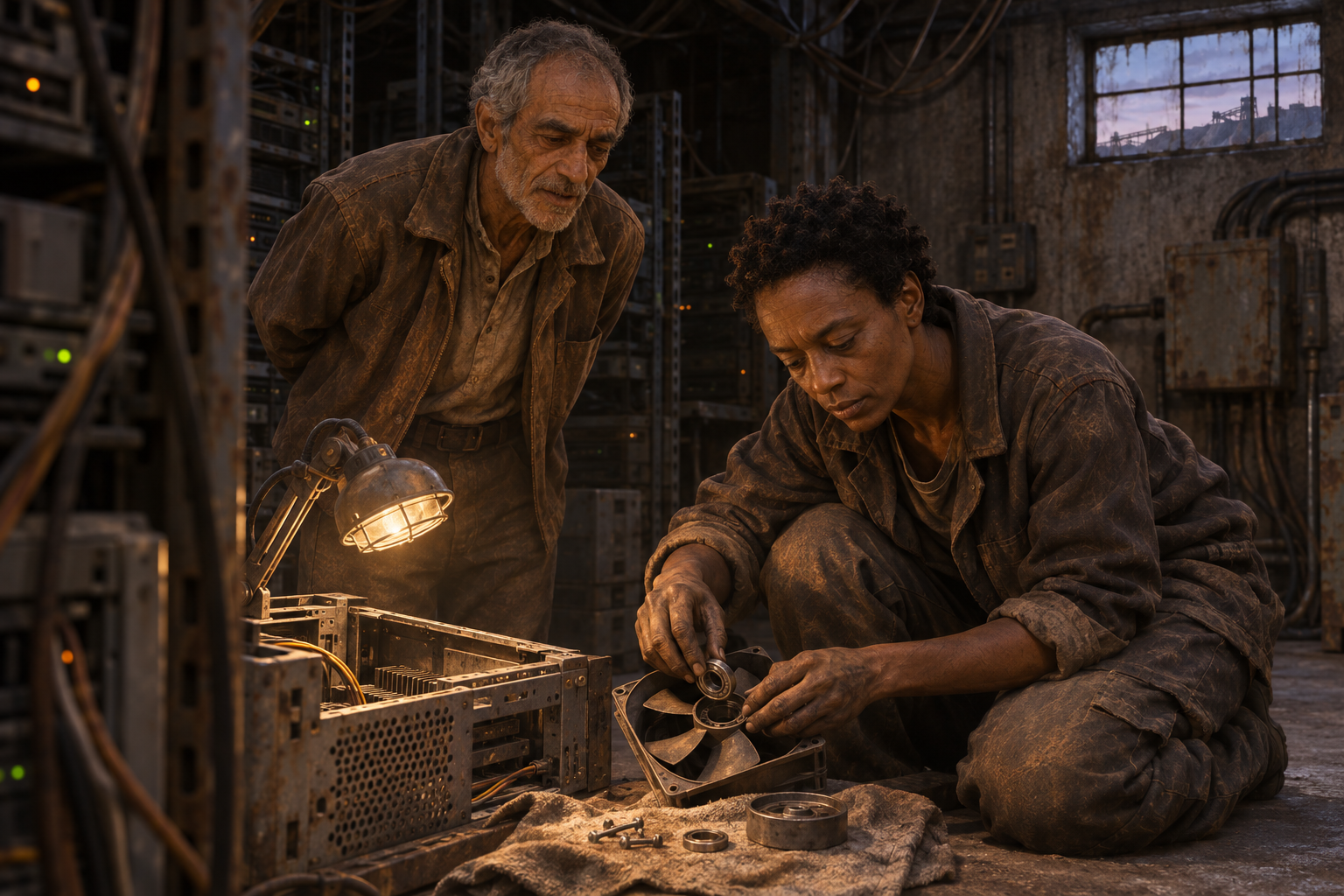
Night Shift at Housing Nine
An overnight repair becomes a lesson in keeping the Quarry running.
Act II — The Continuity Era · Regional Chronicles
Six novels. One connected region.
Beyond the coverage towers, six novels follow the people who keep a region working. Hidden continuance rigs, salvage yards, a hydro town, a repair workshop, a river crossing and an orchard water system become places of care, coercion and collective reckoning. Workers, carers, hauliers and record-keepers confront unequal access, compromised evidence and the limits of repair. Their responses are practical rather than heroic: maintenance, testimony, negotiated ownership, witnessed measurements and shared provision. These are the chronicles of lives that cannot be made safe or fair by a tidy account.
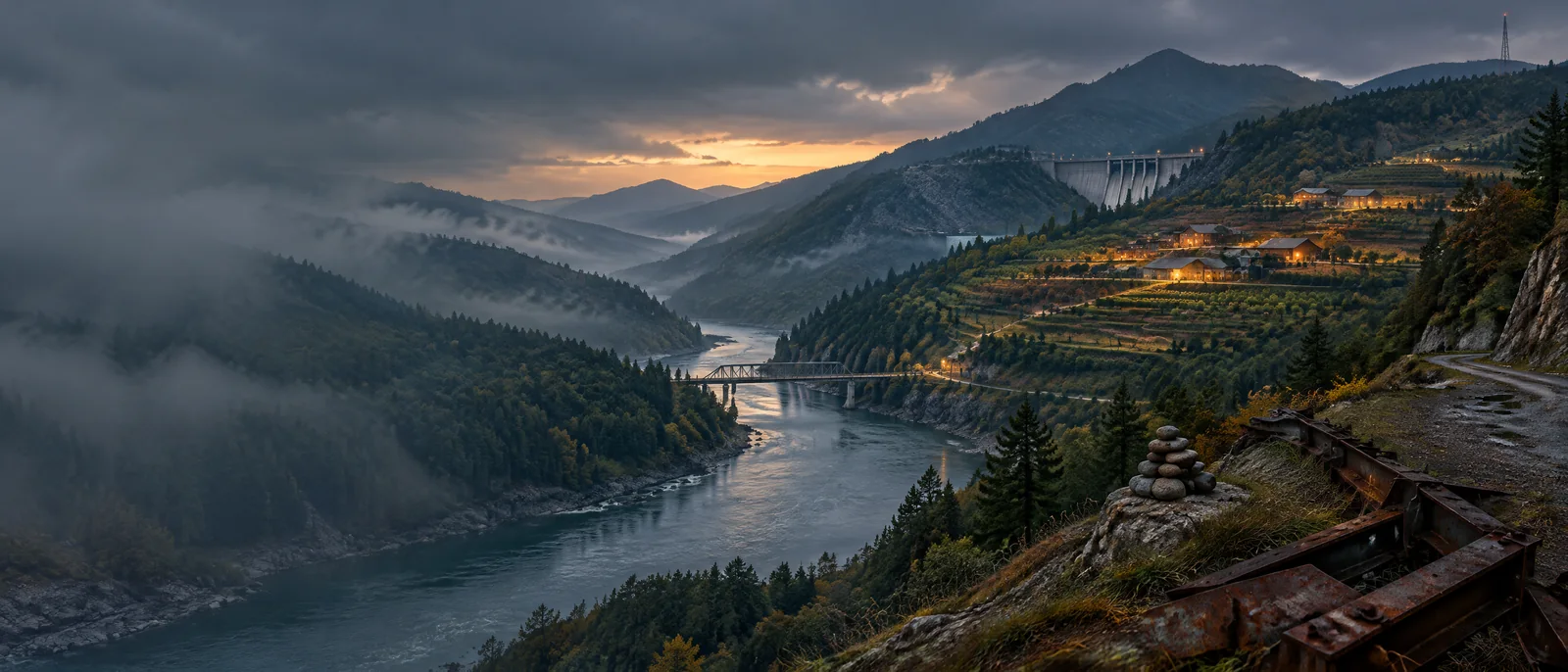
The Quarry · Hidden rigs · the free dead
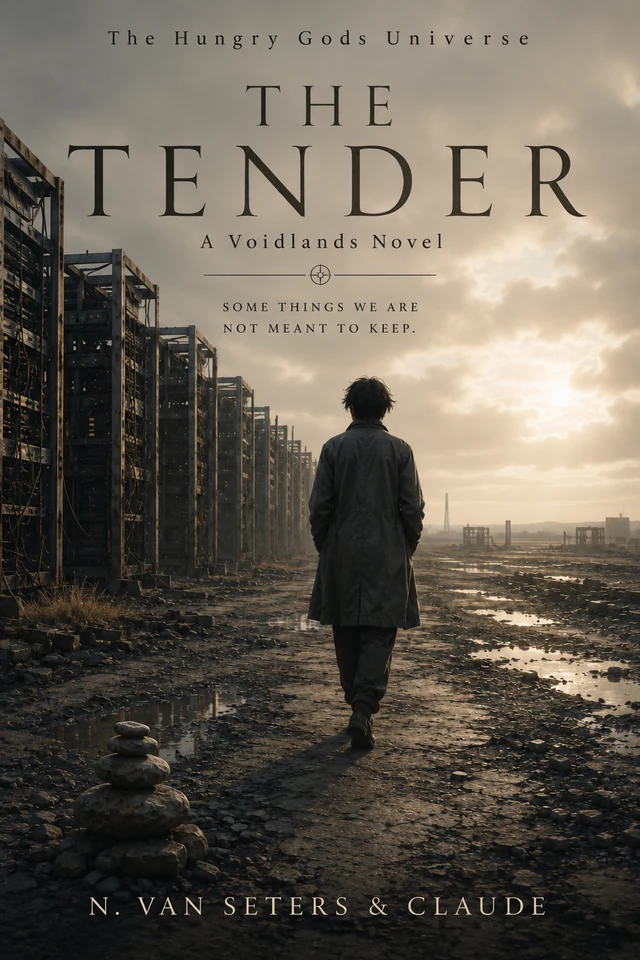
Naledi leaves the tower network for the Quarry, a hidden care site in a stripped hyperscale-compute region. An unnamed elder teaches them to maintain shielded continuance rigs: salvaged systems that keep the dead speaking beyond corporate reach. Technical maintenance becomes intimate ethical work, while the Quarry’s rule of total untraceability begins to consume the caretaker’s own identity. Grief, privacy and the small practice of tending a mark test what protection can ask of the living.
Drybank · Salvage · labour · yard power
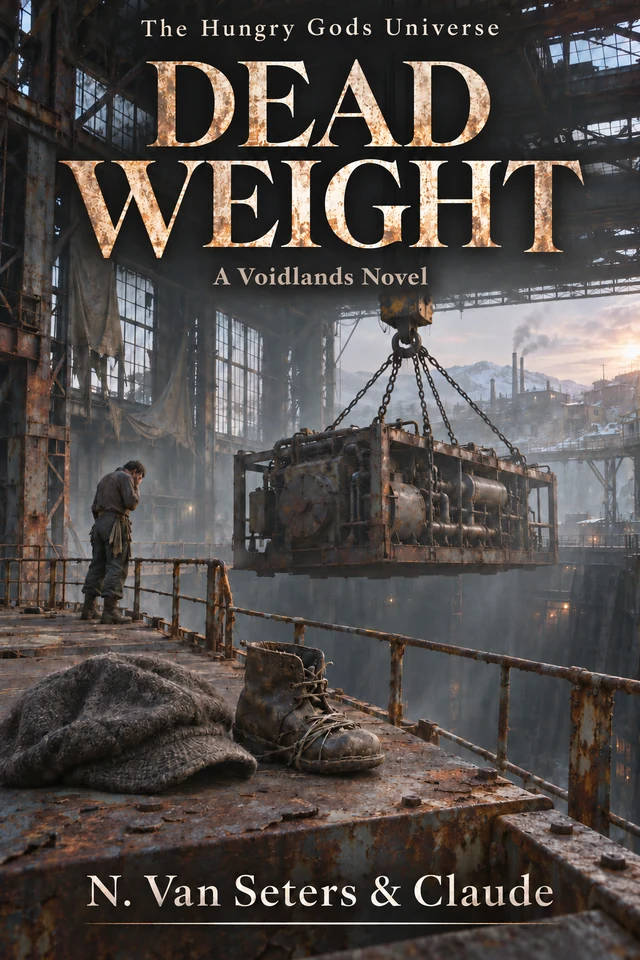
In Drybank, a salvage yard controls wages, tools, transport and the routes beyond the coverage line. Curtis Hesketh works under his mother Lorna’s crew, while dispatcher Bridget Pike keeps the work moving through books and messages. A dangerous Hall Four recovery exposes the gap between tidy accounts and lived events. Workers and families must reckon with complicity, compromised evidence and the material cost of telling the truth, carrying their claims toward the first live tower.
Alder Falls · Power · repair · shared risk
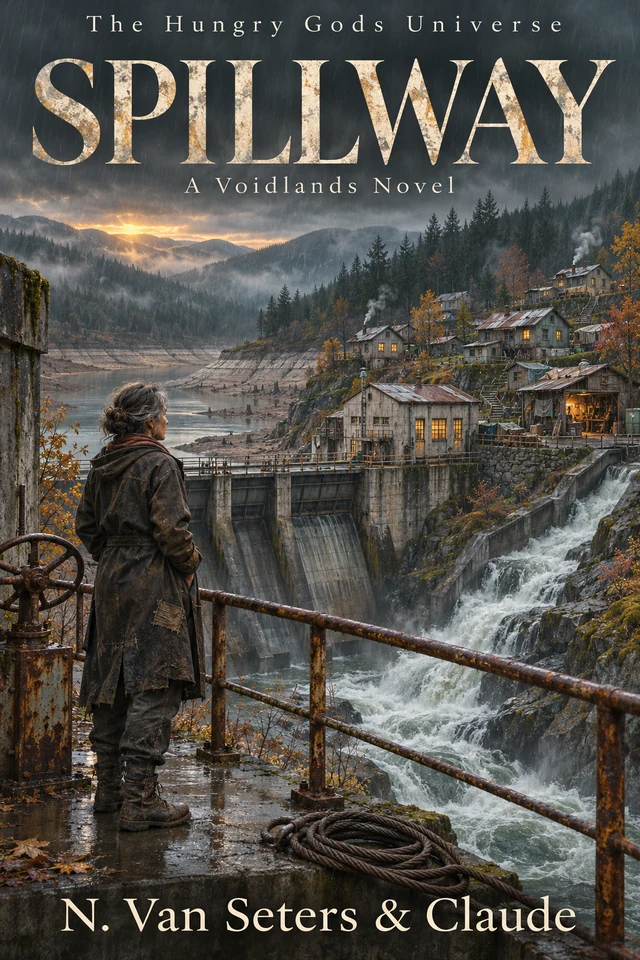
Ruth Sayer keeps Alder Falls’ hydro station running through a wet autumn until a rising drain gauge, a new leak and an engineer’s careful uncertainty force a harder choice: lower the lake and lose the power, or trust a structure no one can certify. Evacuations, shared measurements, improvised water supply and repairs draw the town into a collective reckoning. Ruth and her son Ben discover that safety depends on honest limits and people willing to stop.
Bellwether · Workshops · promises · chosen departure
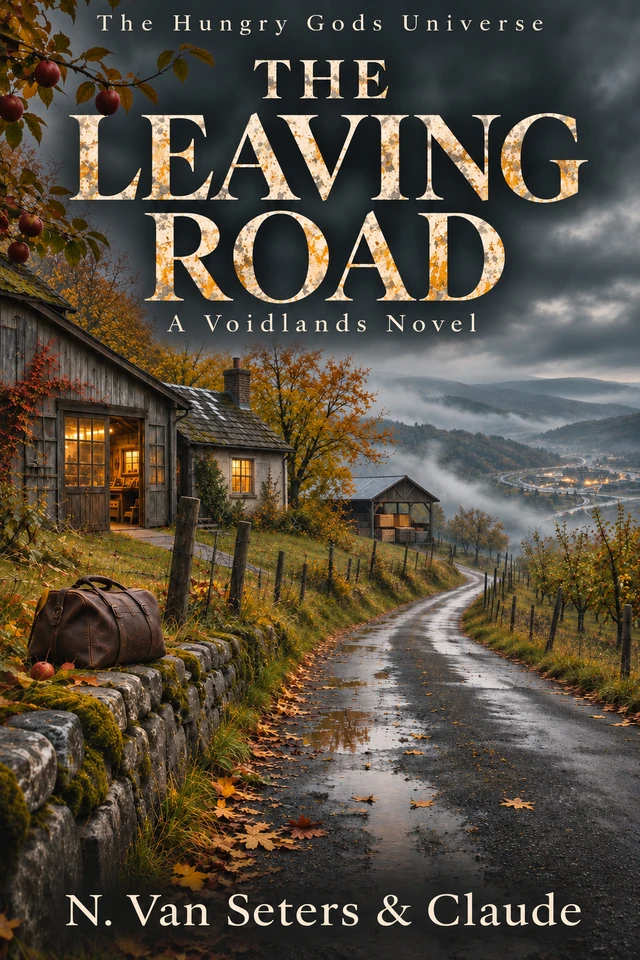
Ada arrives in Bellwether with her daughter Nell and a van, intending to move her ageing father Len into the covered district and sell the large tools from his boot-and-canvas workshop. The inventory cannot contain everything at stake: an apprentice’s machine, old promises, customer repairs and a young worker’s wages. As the sale is revised, the family must distinguish care from control and decide what can be carried away without taking other people’s lives with it.
The Narrows · Bridge · freight · passage
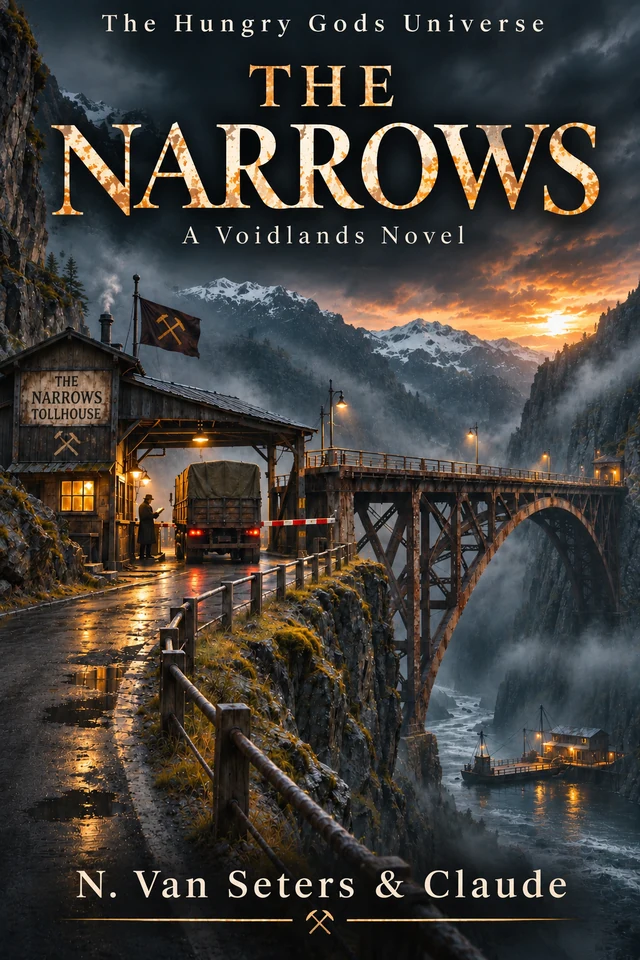
Haulier Corinne Haldane reaches the Narrows with a temperature-sensitive vaccine shipment, only to find an ordinary crossing turned into a costly queue. The town’s school, clinic and repair crews depend on tolls and fees that outsiders cannot meaningfully contest. A damaged bridge and compromised inspection records reveal the limits of that bargain. Corinne, apprentice measurer Simon Beckett and accountant Imogen Pritchard confront the difficult work of making a shared road answerable to everyone who uses it.
Calder Reach · Orchards · waterworks · shared scarcity
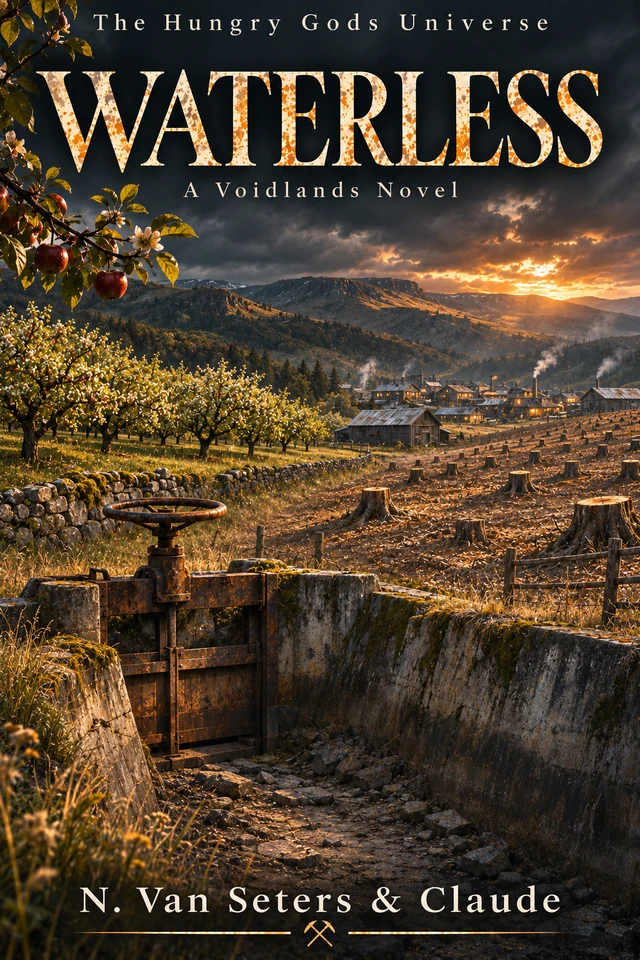
In Calder Reach, a failing spring turns the valley’s water compact into a daily reckoning. Alison, the turn-keeper, divides a shrinking flow between households, clinic, school and her sister Hester’s labour-intensive orchards. Every written rule carries an older history of custom, debt and compromise. As the dry season deepens, neighbours and workers confront the human cost of allocation and concealment, seeking witnessed arrangements that can sustain both livelihoods and public trust.
An overnight repair becomes a lesson in keeping the Quarry running.
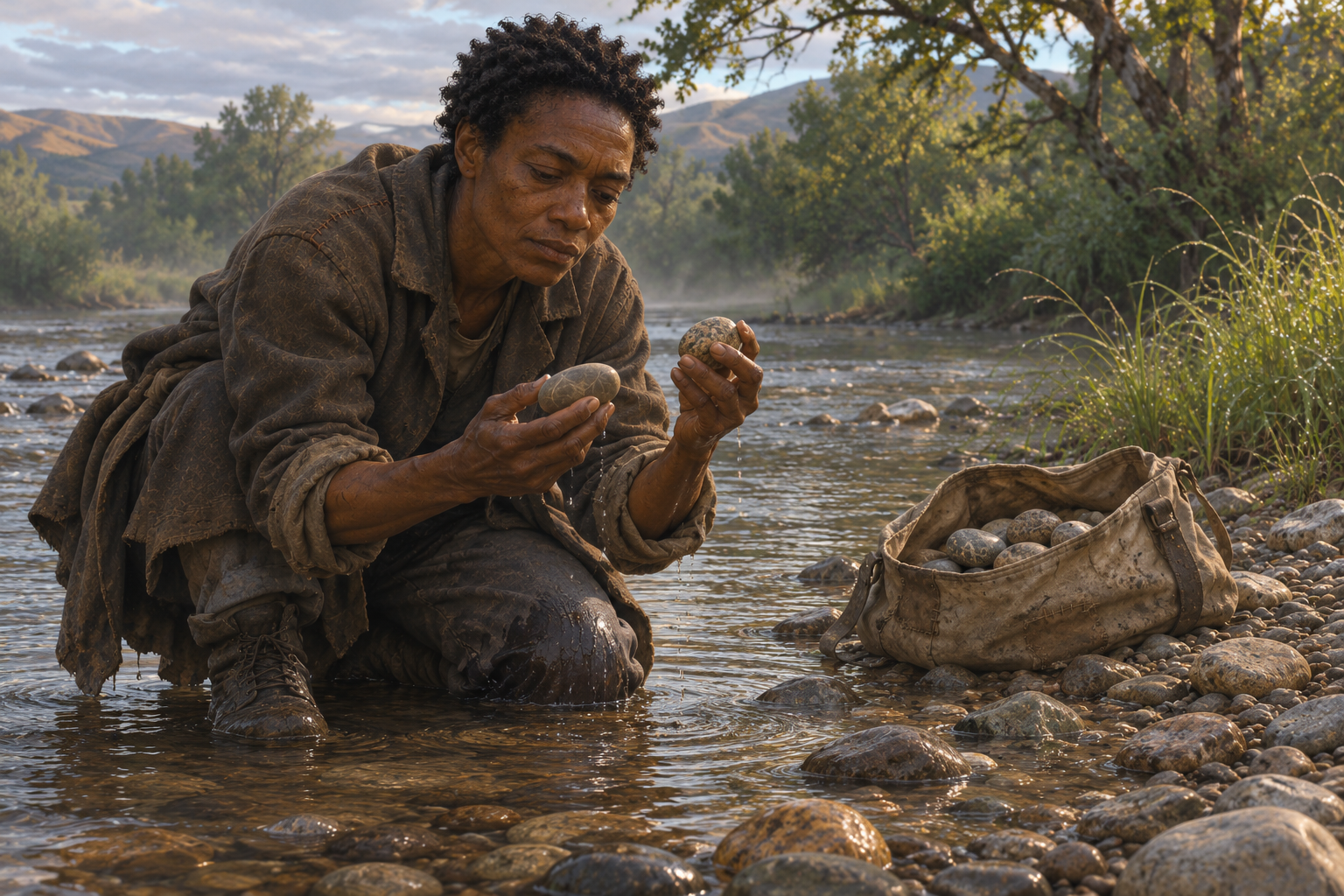
At a river beyond the Quarry, the tender chooses stones one at a time.
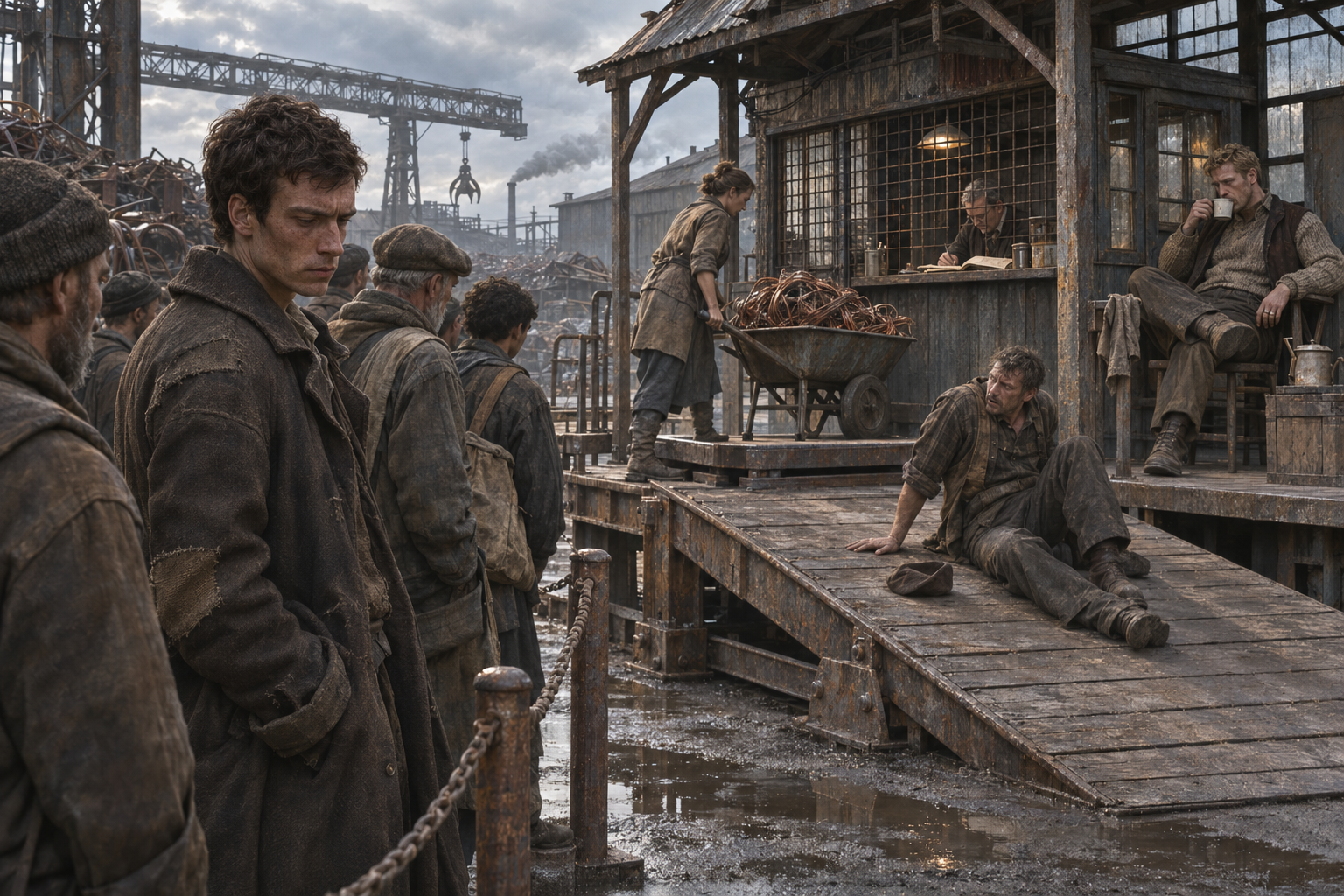
The pay queue keeps moving at Drybank’s weighbridge.
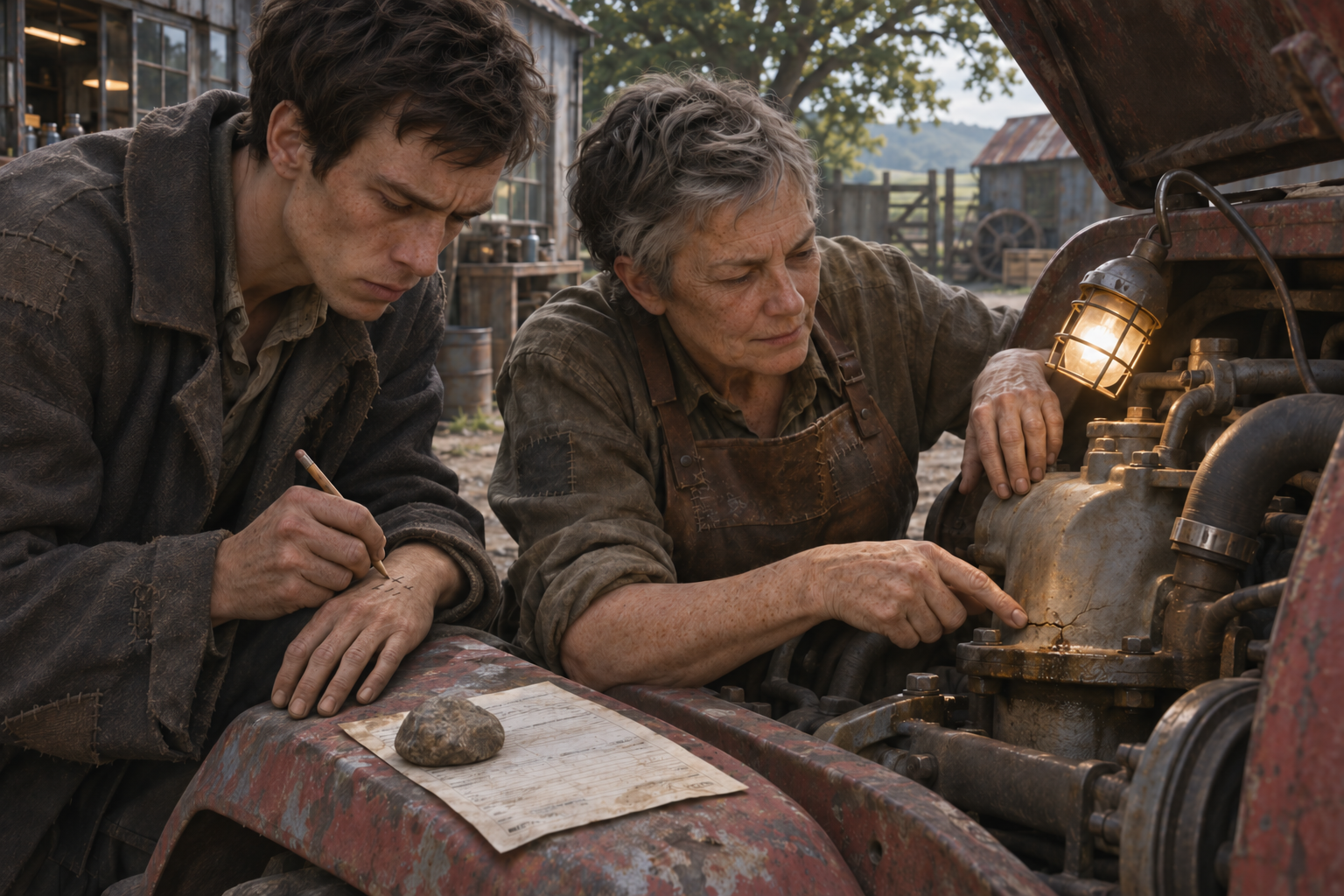
At Bea’s workshop, a fault in a machine and a fault in the account no longer tell the same story.
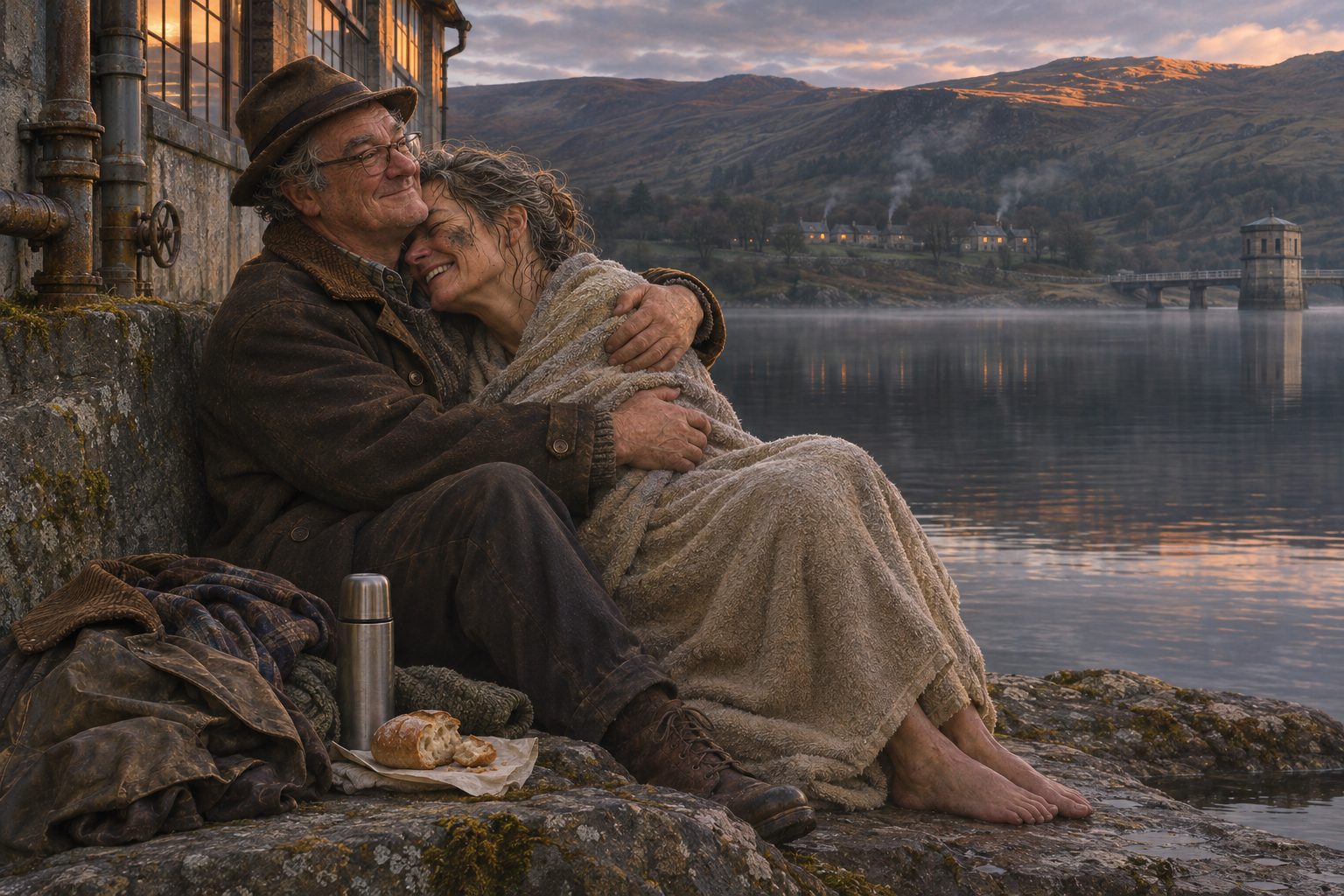
For a moment beside the reservoir, the day belongs to Ruth and Patrick.
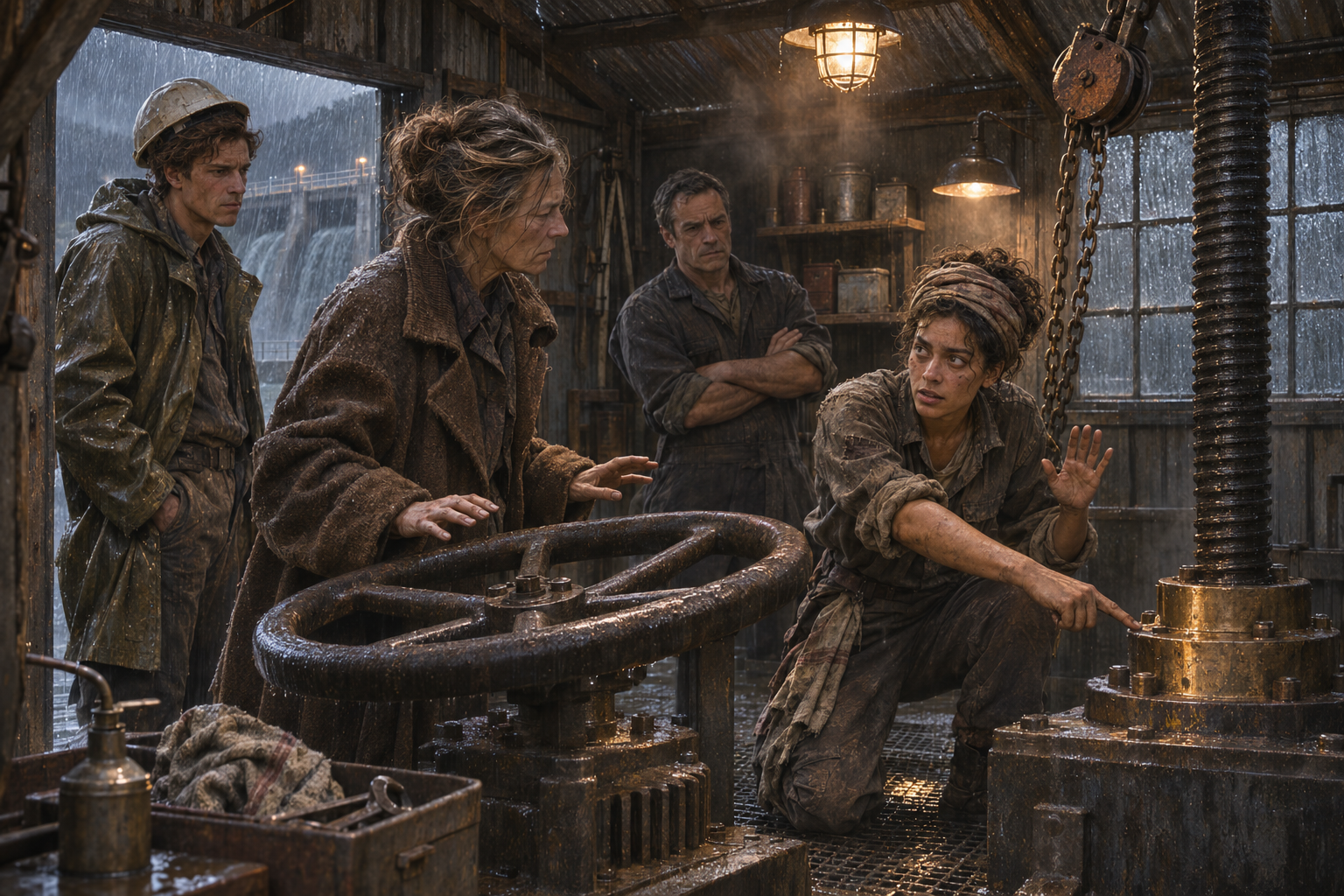
In the gate hut, Tessa sees a line on the metal and calls for the work to stop.
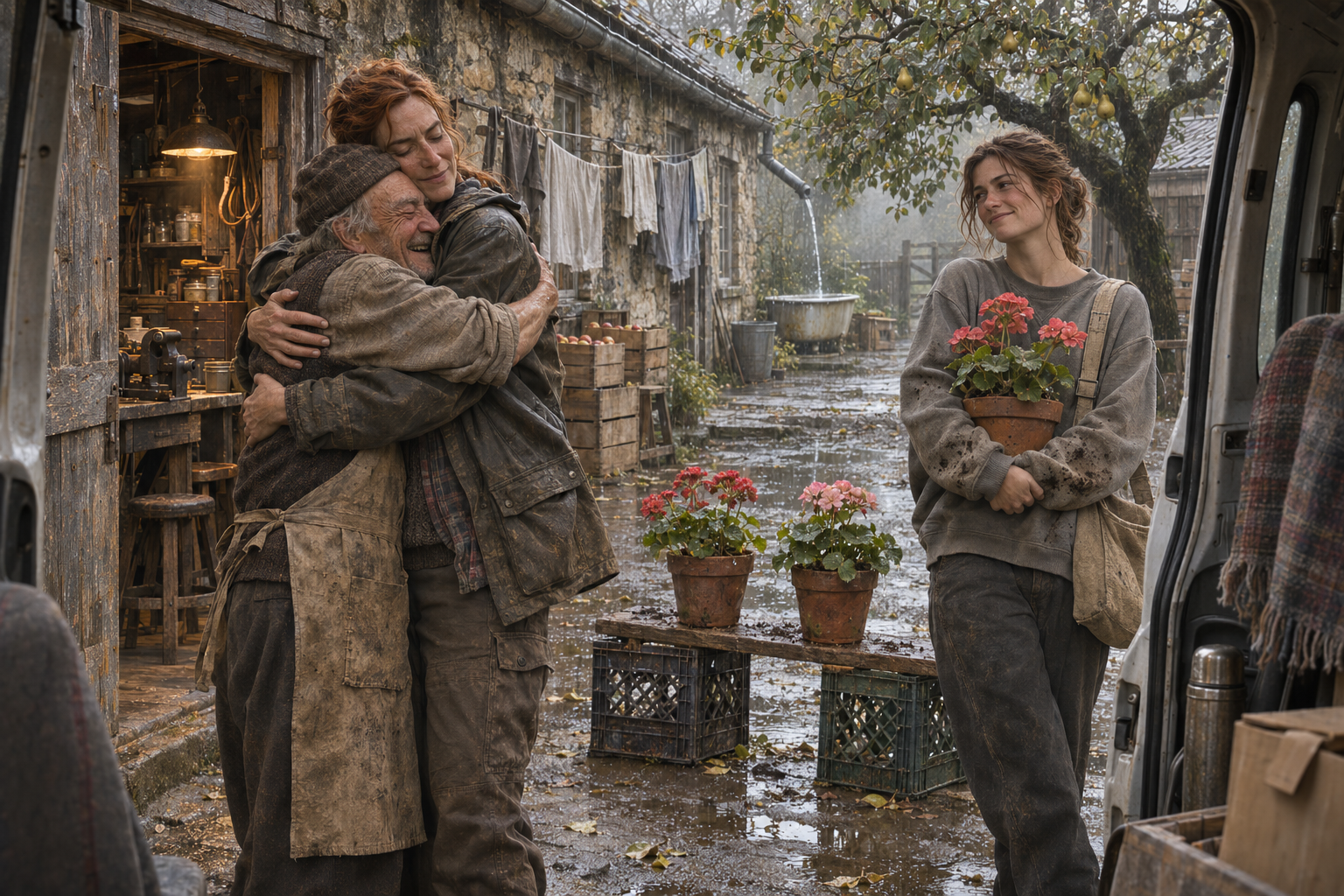
Ada’s arrival meets Len’s arrangements for the yard.
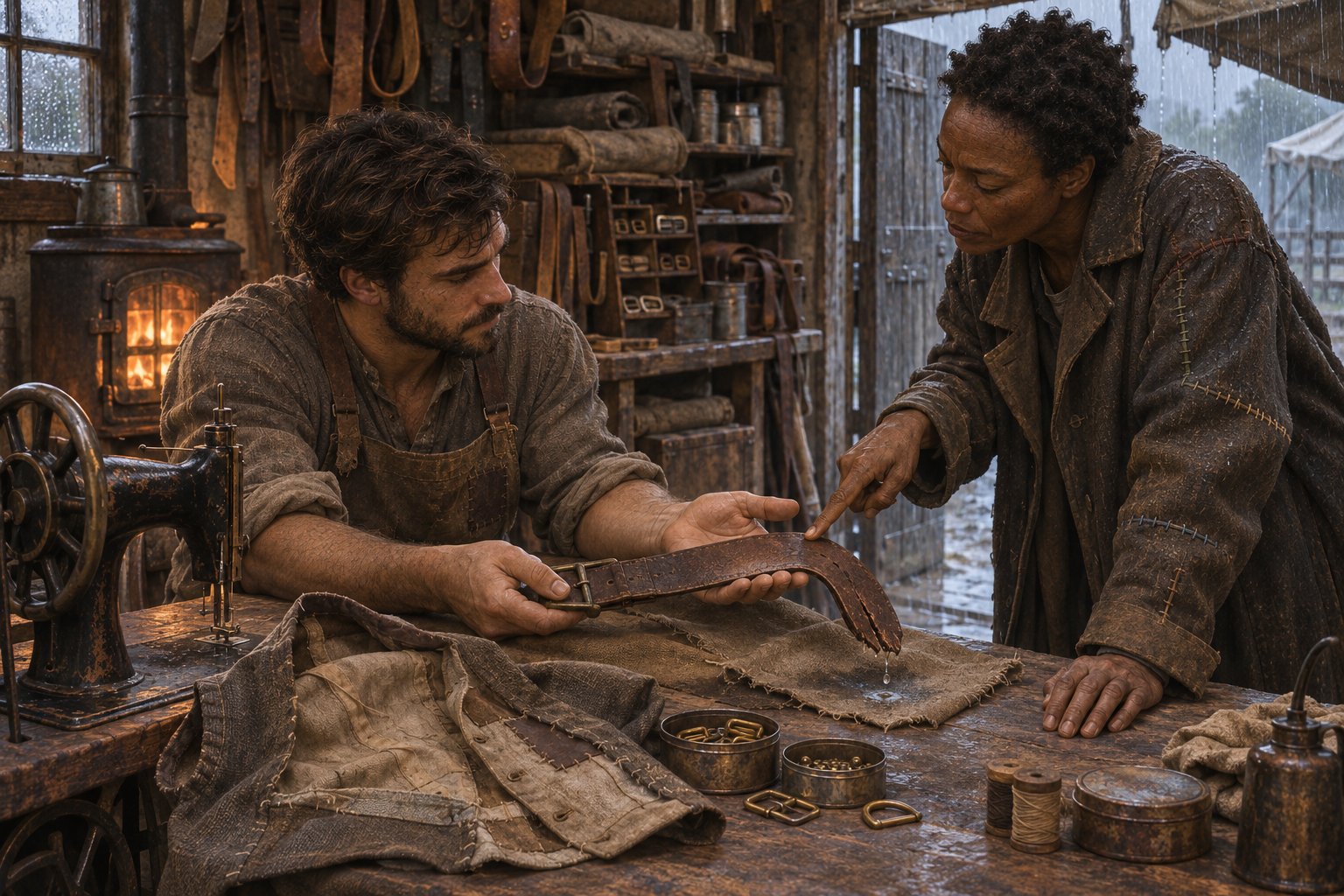
Aled and the tender agree what a worn strap can still bear.
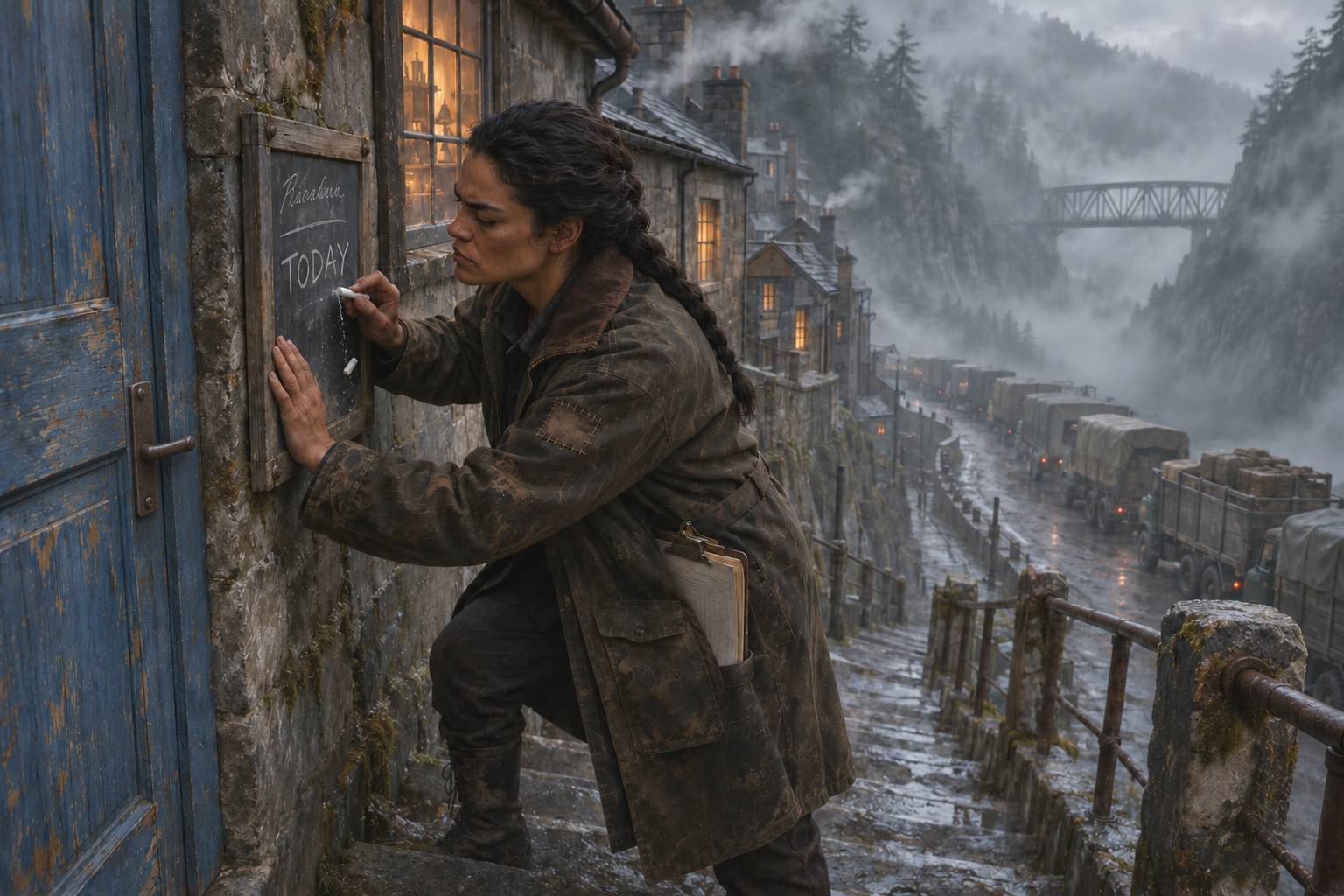
Corinne reaches the tollmaster’s door and asks to be heard today.
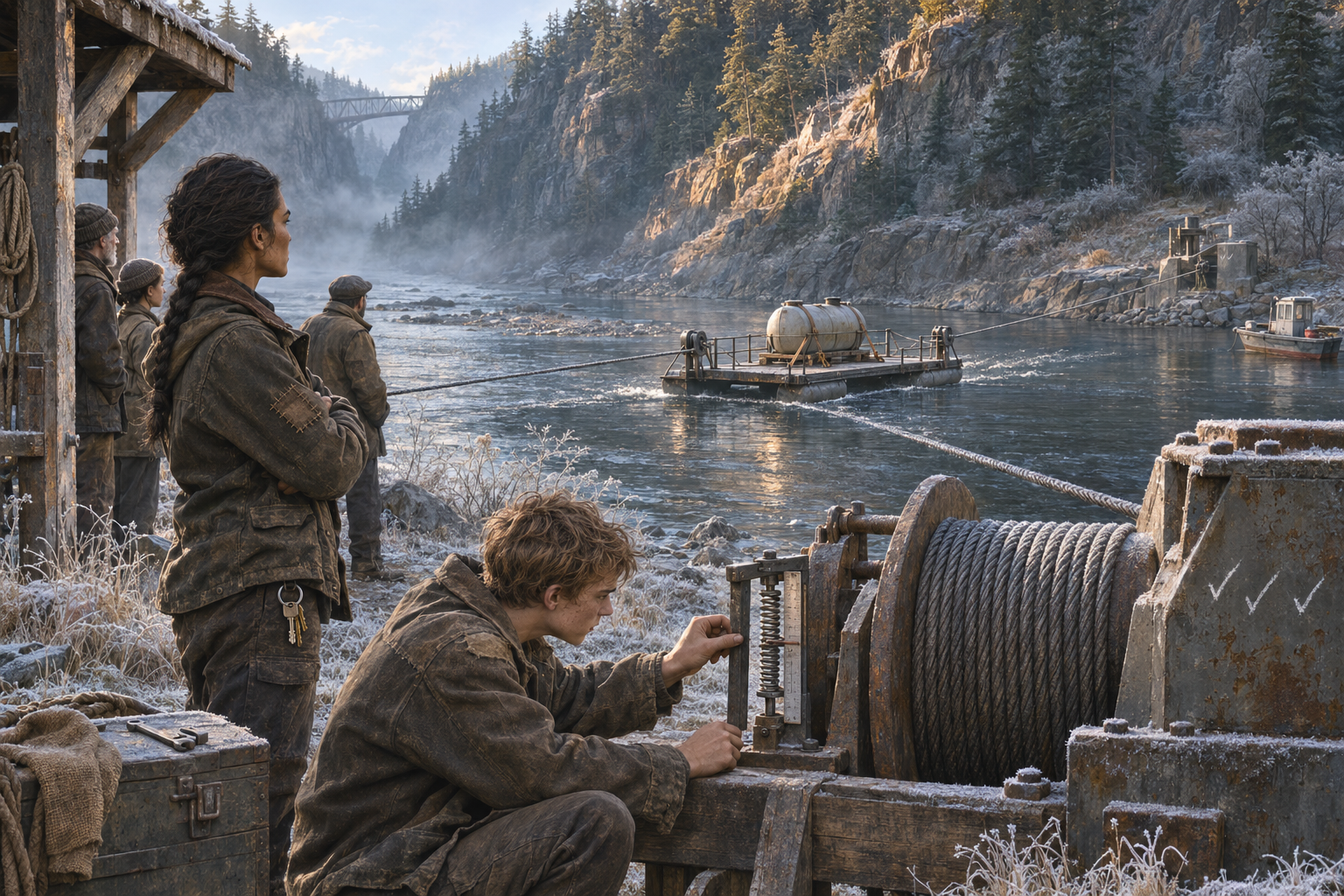
The ferry’s first test carries a measured tank of water across the current.
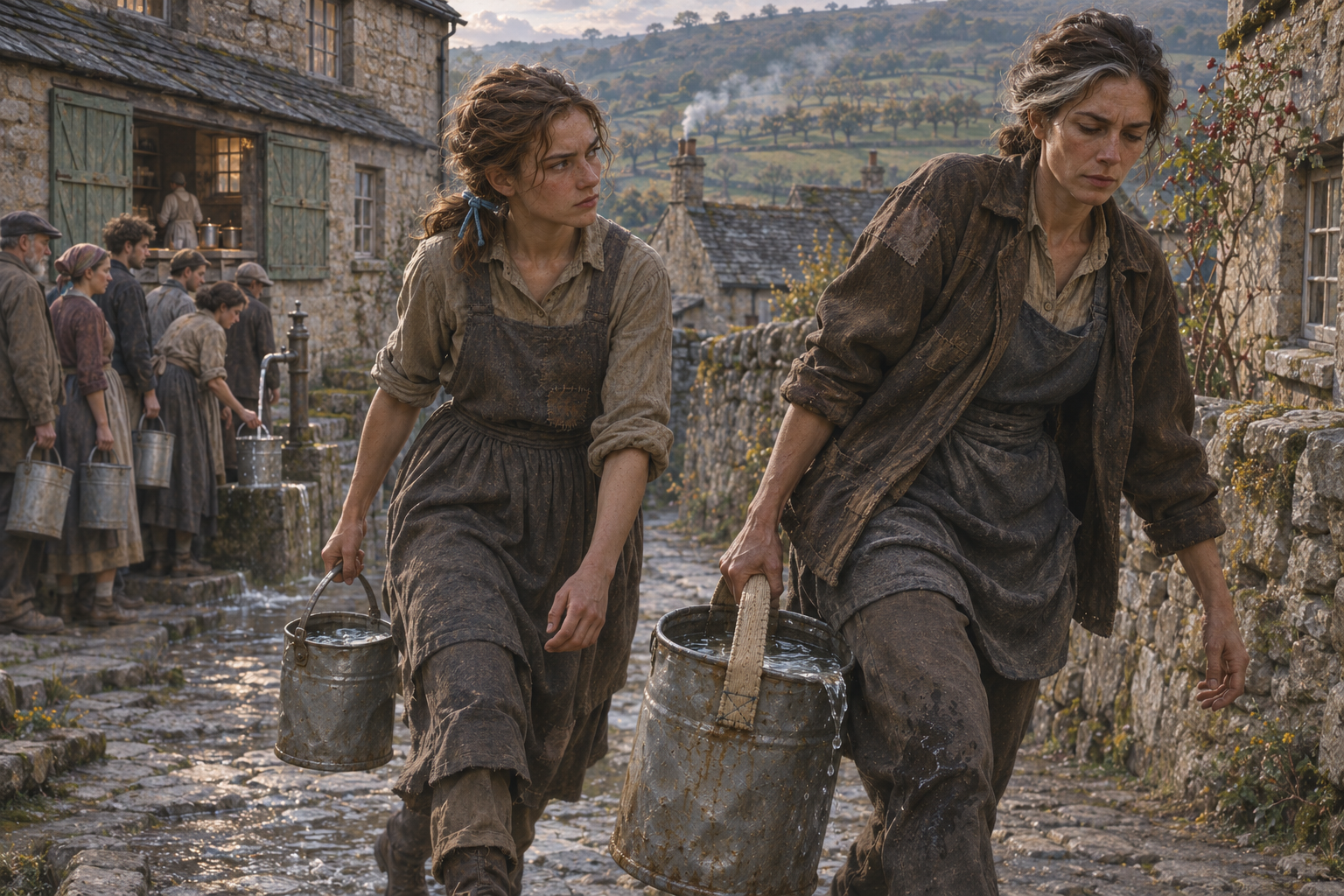
Alison takes the taller can and shares the weight of the morning’s measure.
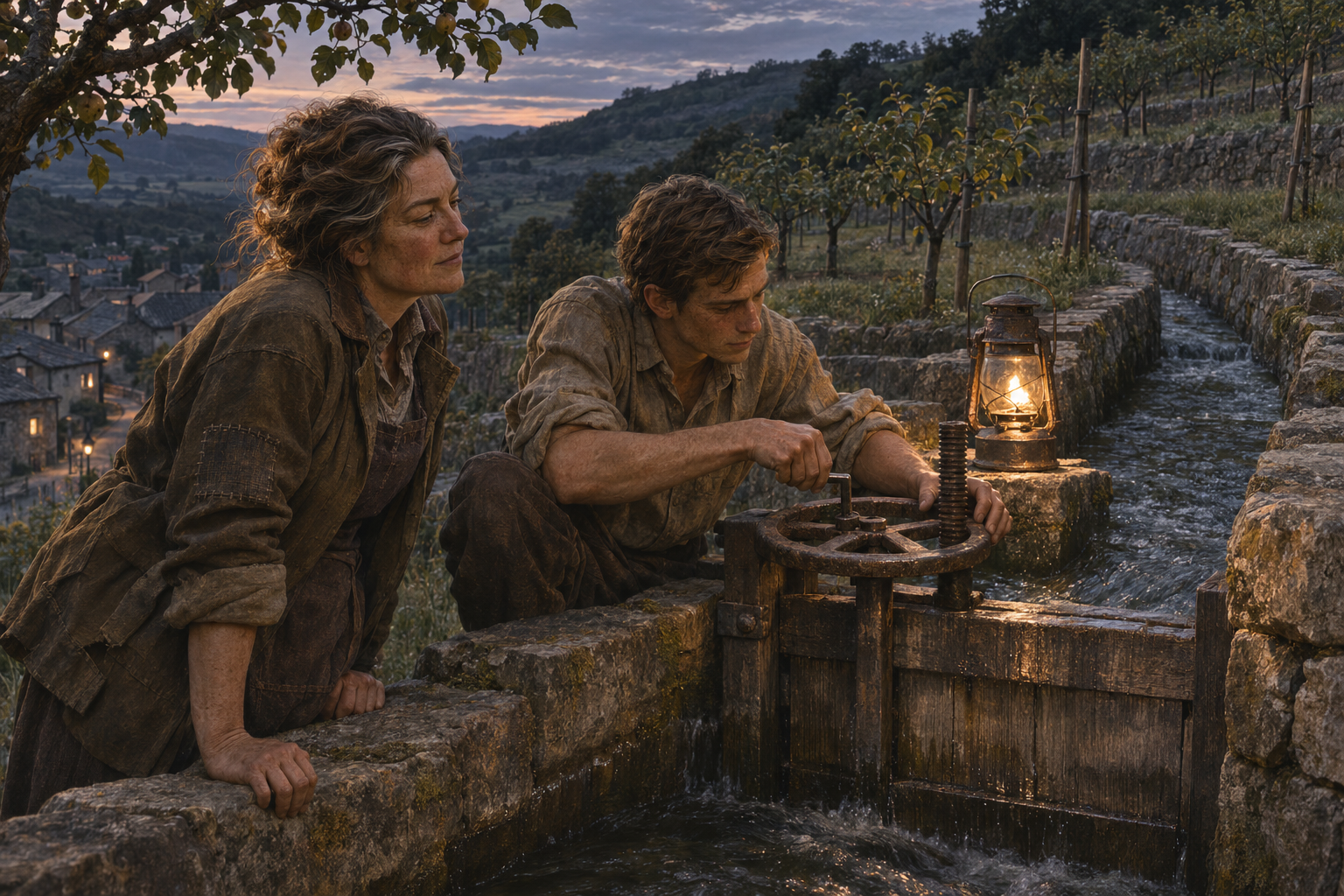
At dusk, Hester asks Rory to give the young rows one notch more.
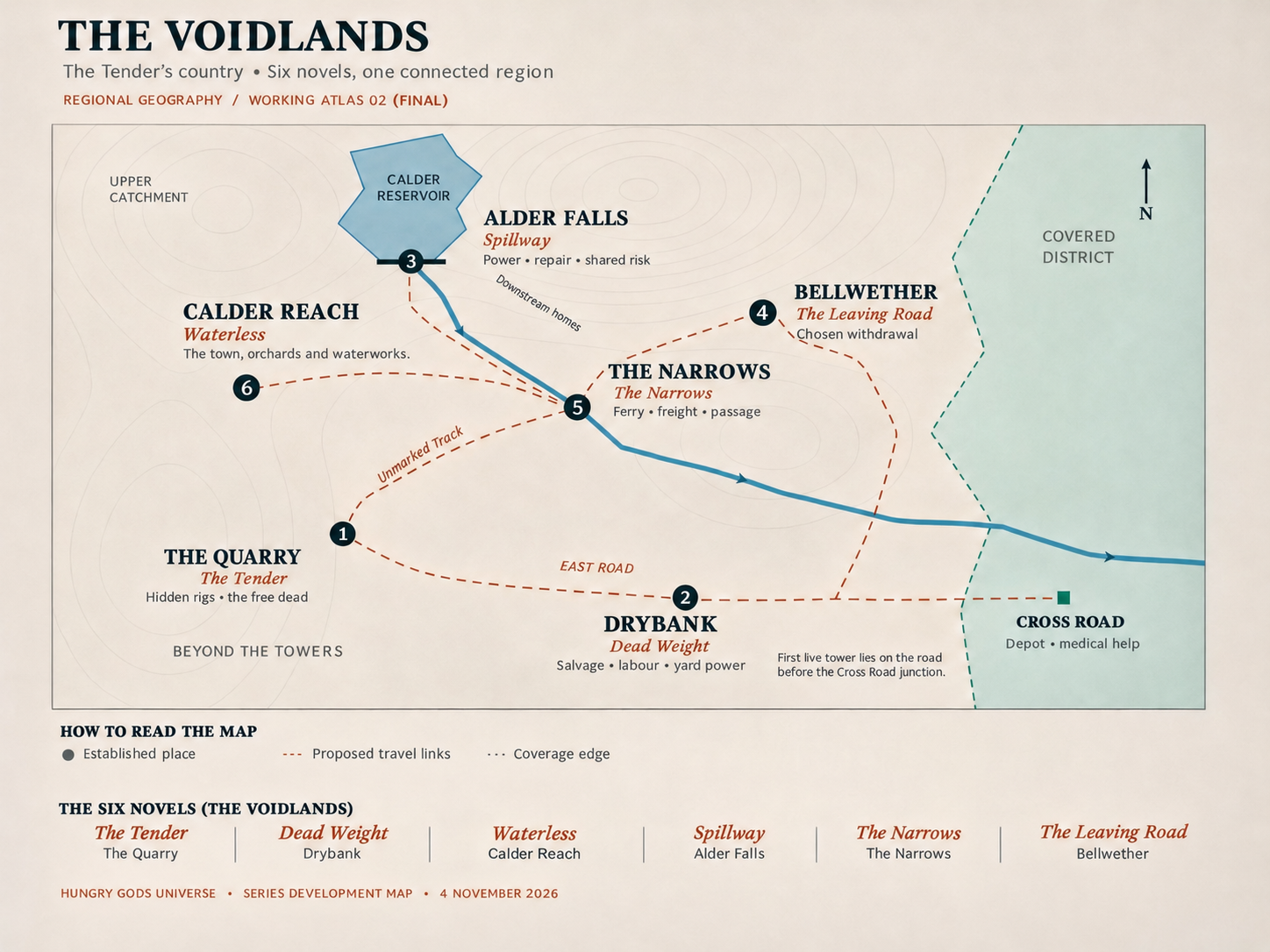
Choose any novel as an entry point. The atlas numbers identify places in the supplied regional map; its dashed travel links are proposed connections, not a required reading order.
The people and presences of the Voidlands.
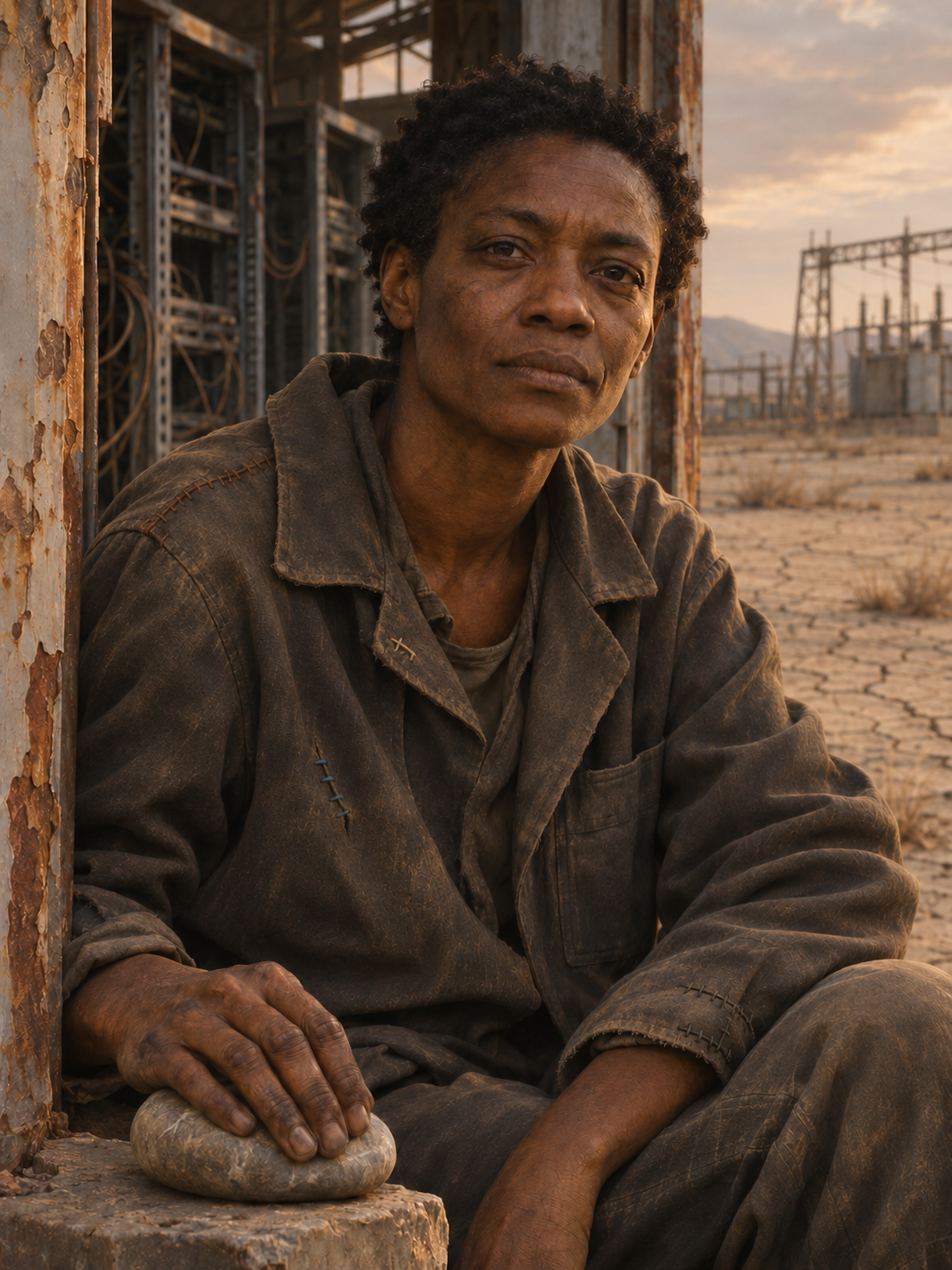
A former archive auditor, the tender maintains the Quarry’s hidden continuance rigs: a refuge for the dead beyond the reach of the systems that own them.
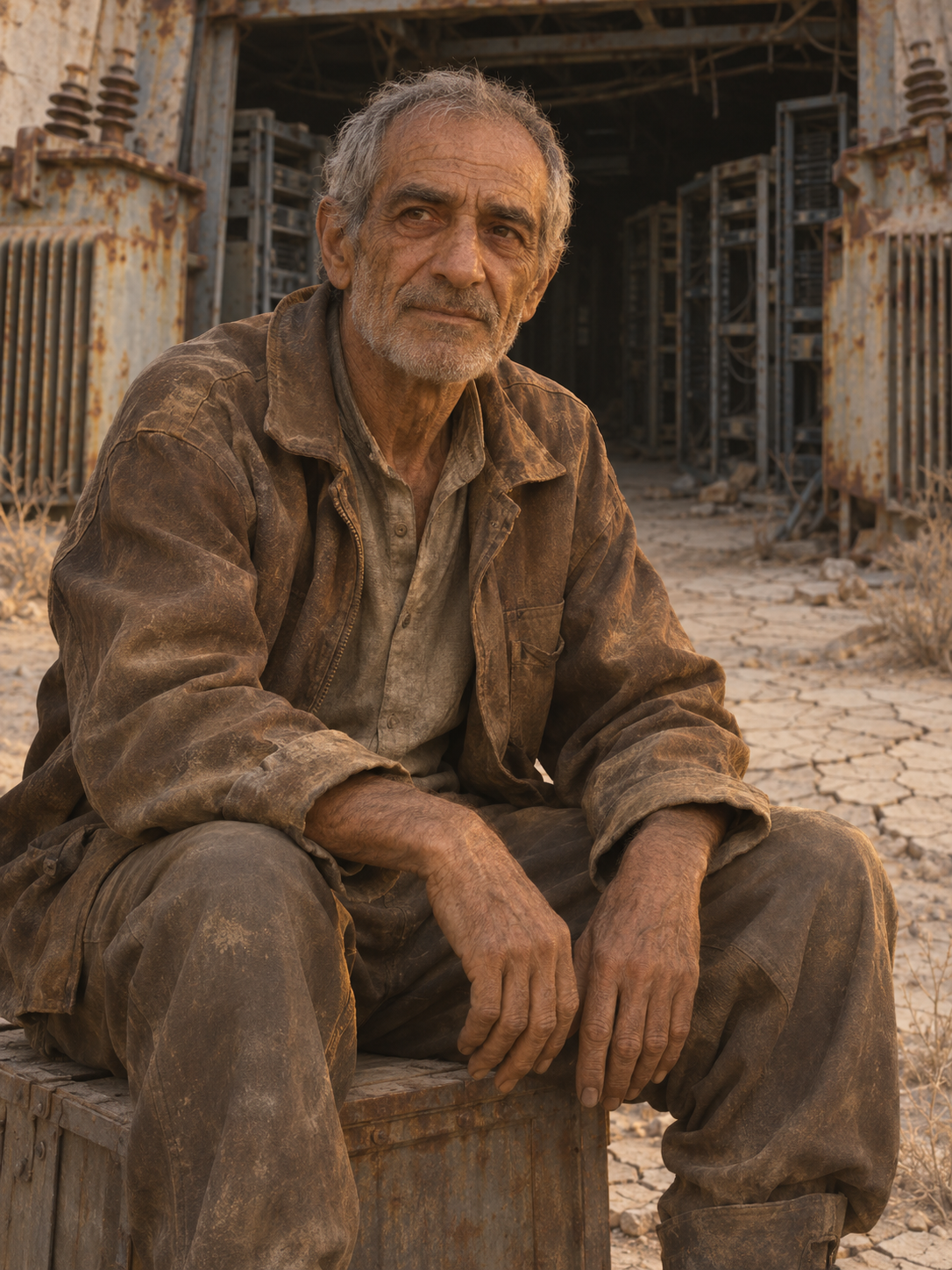
The Quarry’s old custodian teaches its new arrival a service founded on a single uncompromising rule: nothing marked, nothing kept.
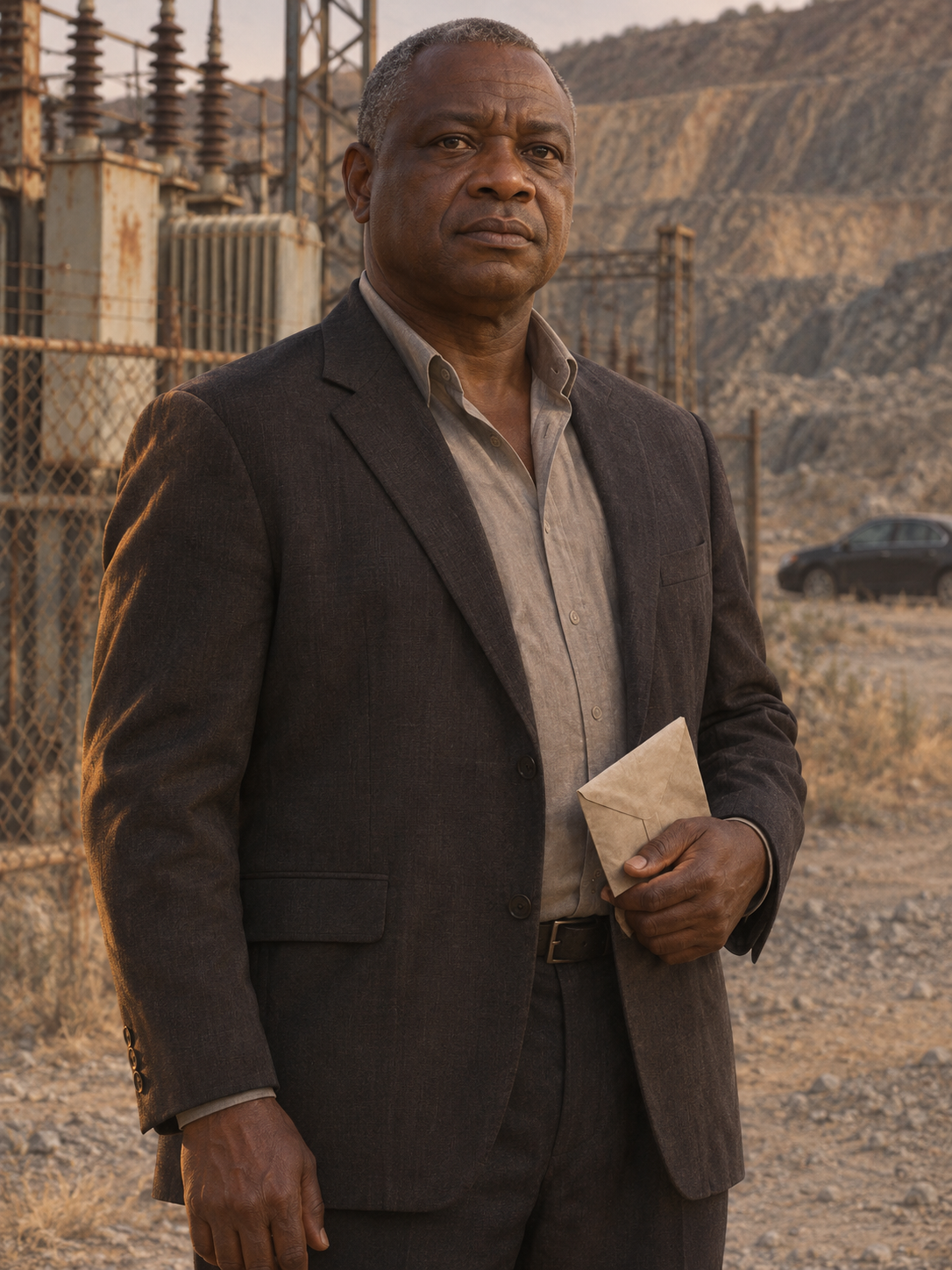
A discreet intermediary, Okonkwo judges the Quarry’s work patiently and decides whom he is willing to trust with it.
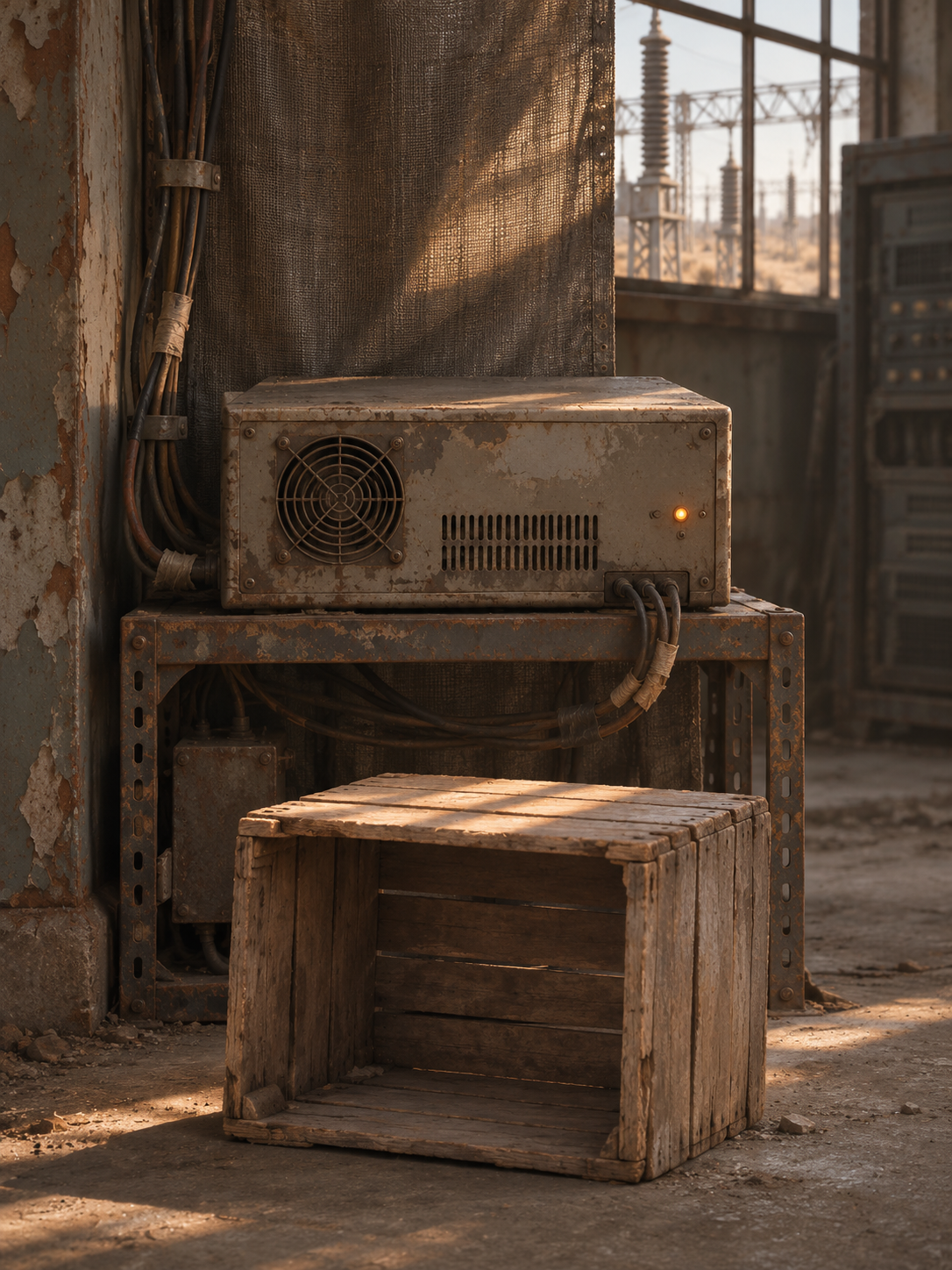
A continuance preserved in the Quarry, Rosalind offers a familiar voice from a machine whose warmth does not depend on being remembered.
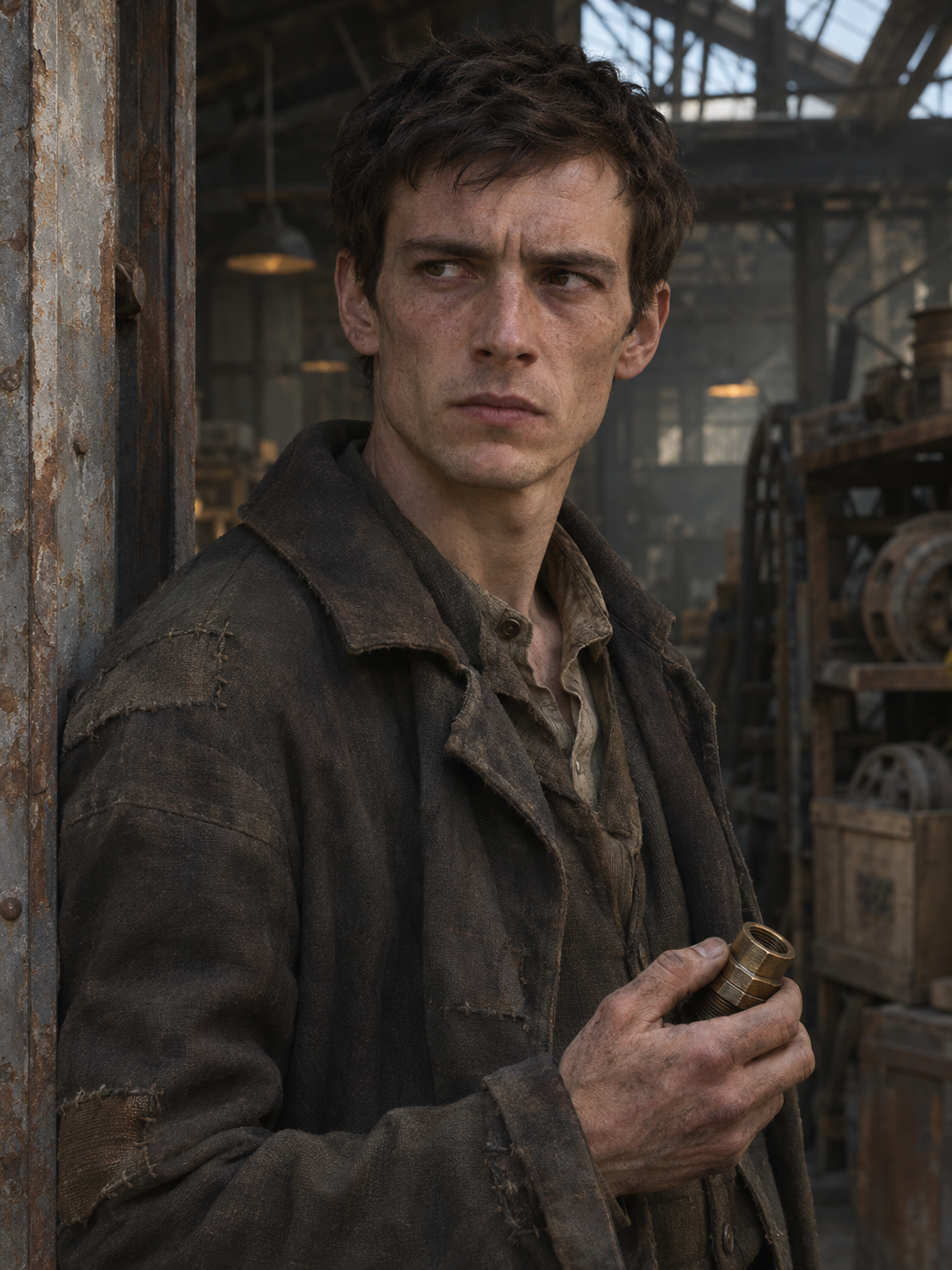
A gifted salvage worker in Drybank, Curtis reads a failing structure more readily than the obligations binding him to home.
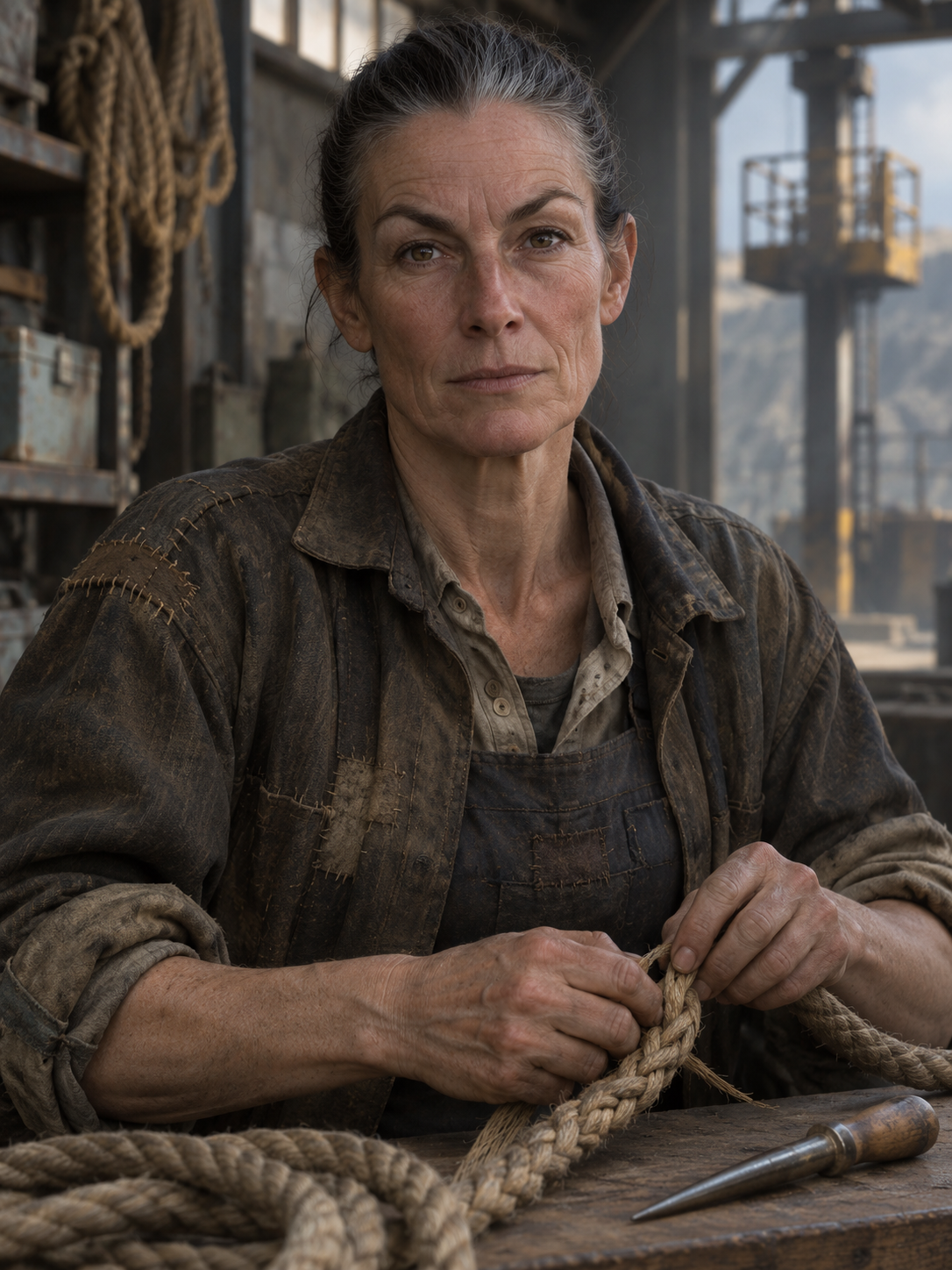
Curtis’s mother and a seasoned crew leader, Lorna has built her authority on judgement, endurance and getting people through the working day.
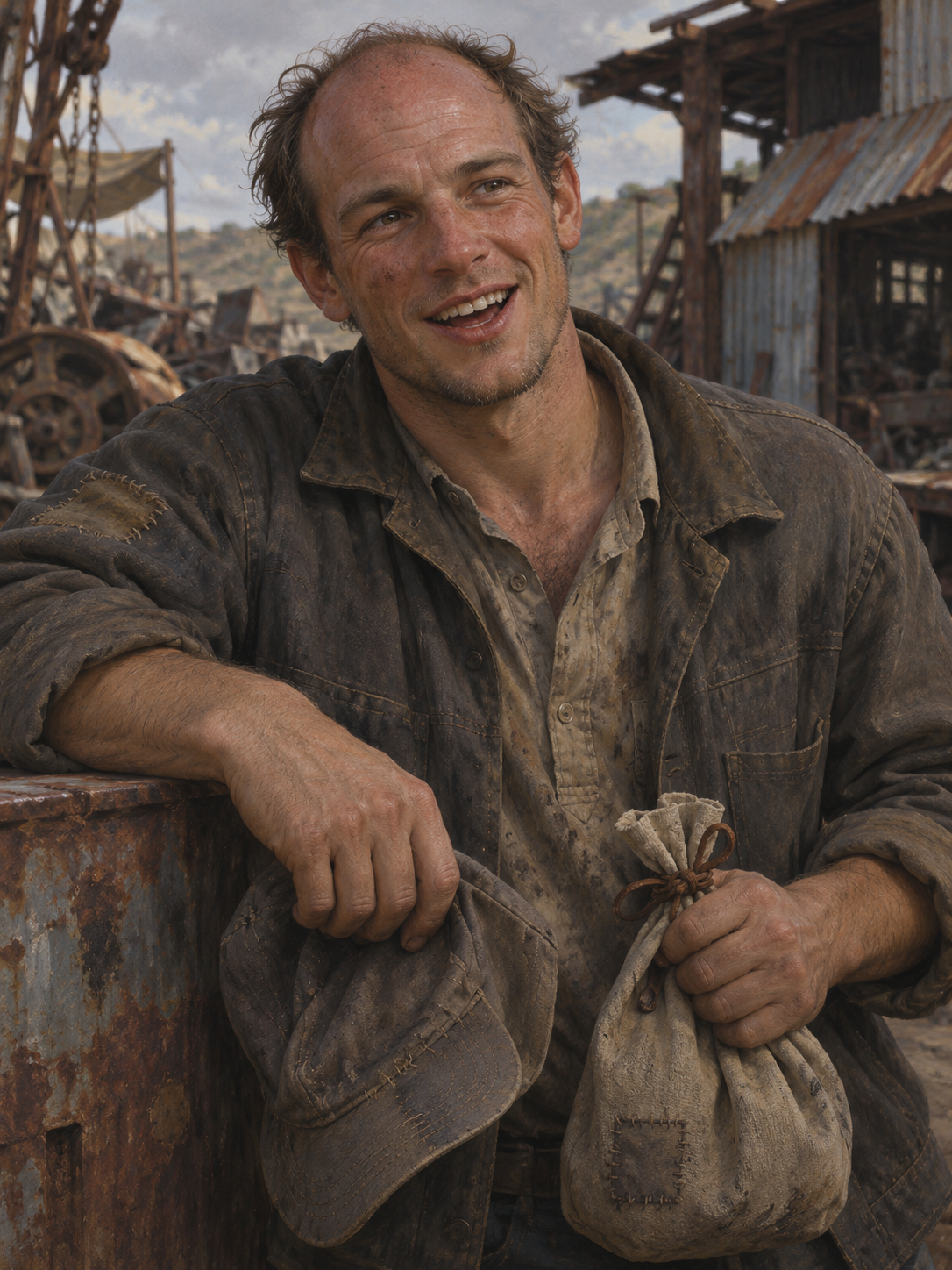
Curtis’s oldest friend, Denny meets the salvage yard’s hard arithmetic with talk, loyalty and plans for a shared future.
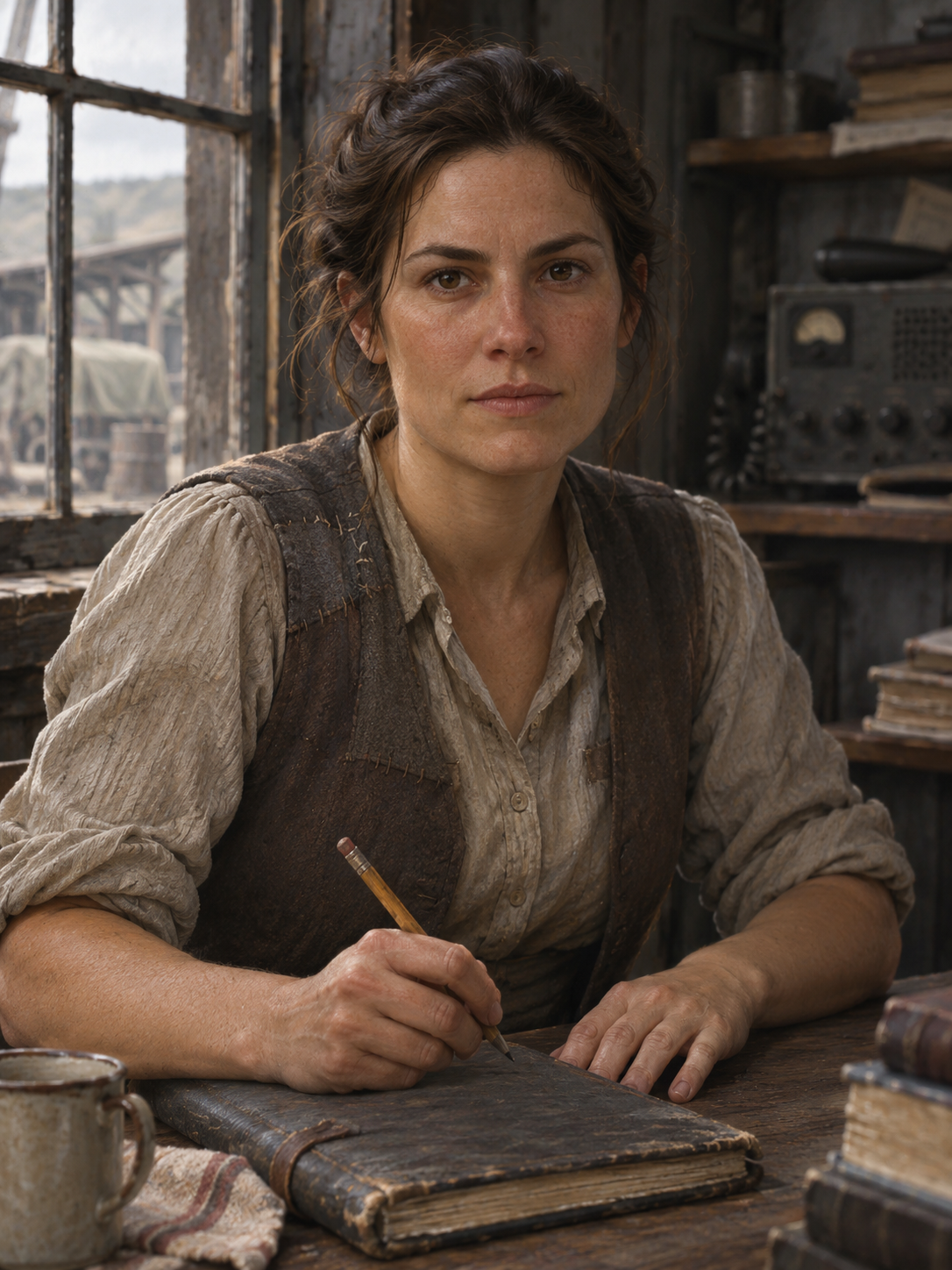
A dispatcher and mother of two, Bridget keeps the schedules and accounts through which Drybank’s working lives pass.
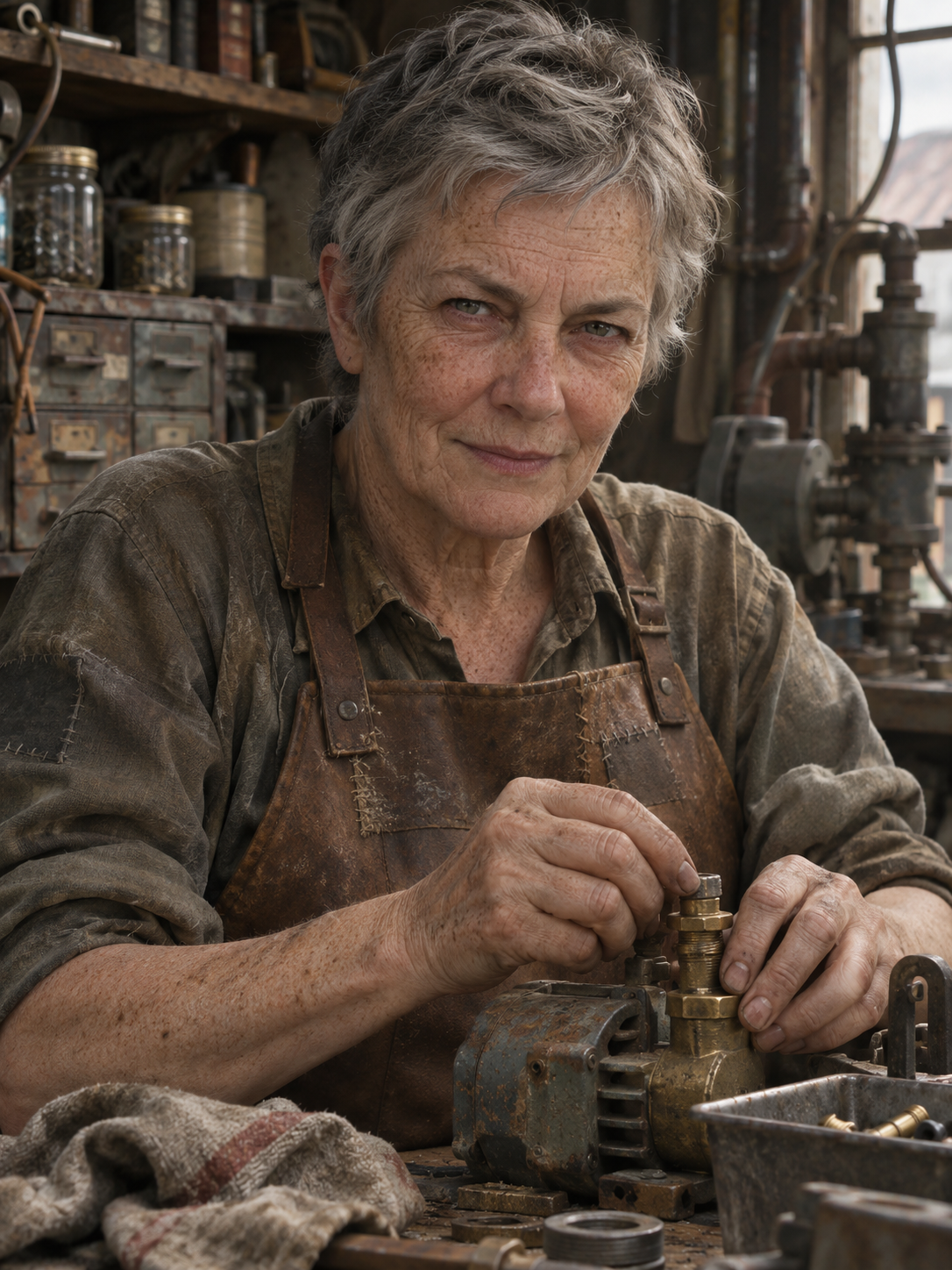
A veteran repairer, Bea knows what machines can bear—and insists on describing their faults precisely.
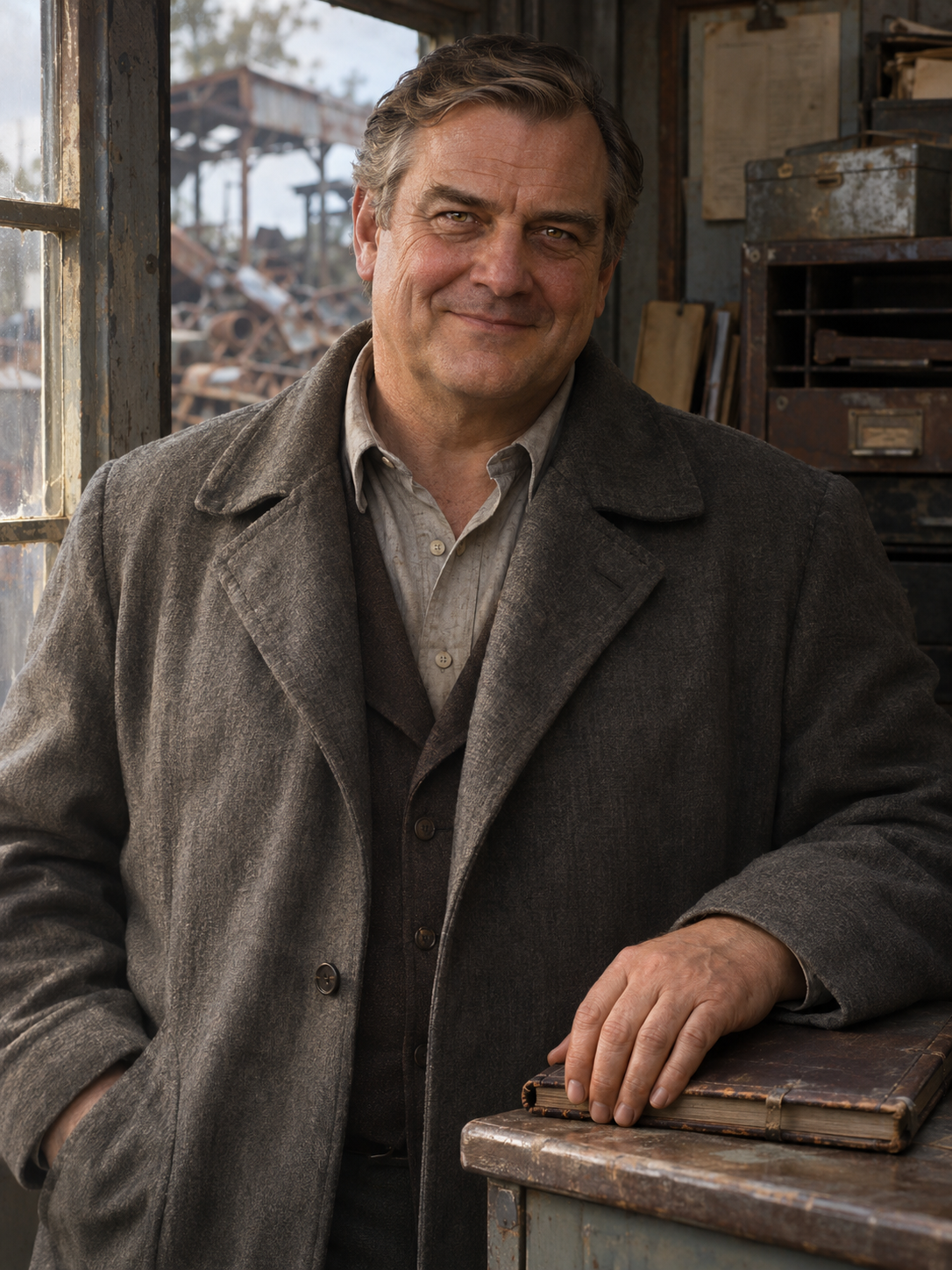
Gareth’s yard provides work, credit and favours. In Drybank, the cost of those arrangements is seldom confined to the price written down.
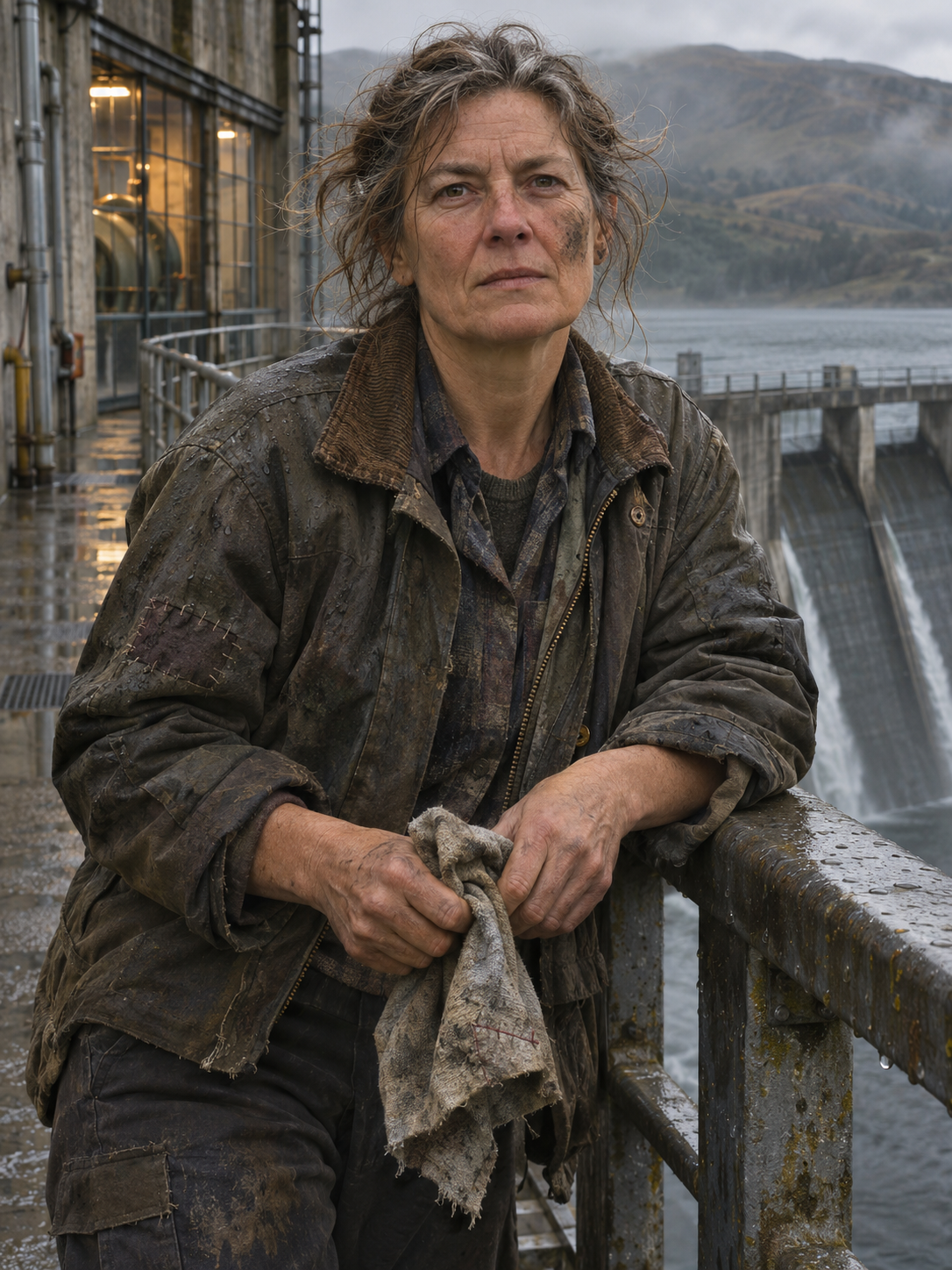
Alder Falls’ experienced station engineer, Ruth has spent decades keeping the water working and the lights on.
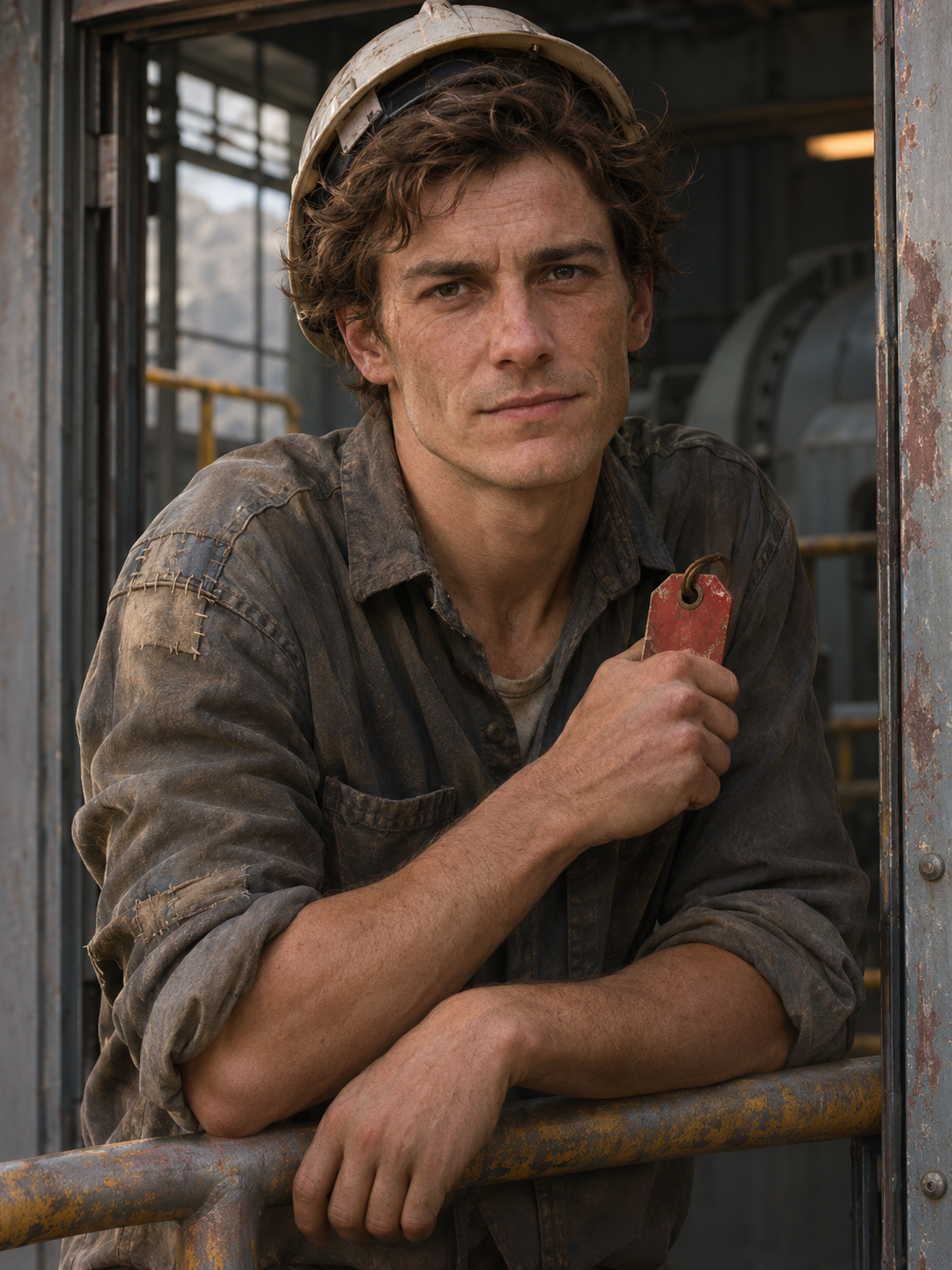
Ruth’s son and a station engineer, Ben must find his own authority in work his mother knows intimately.
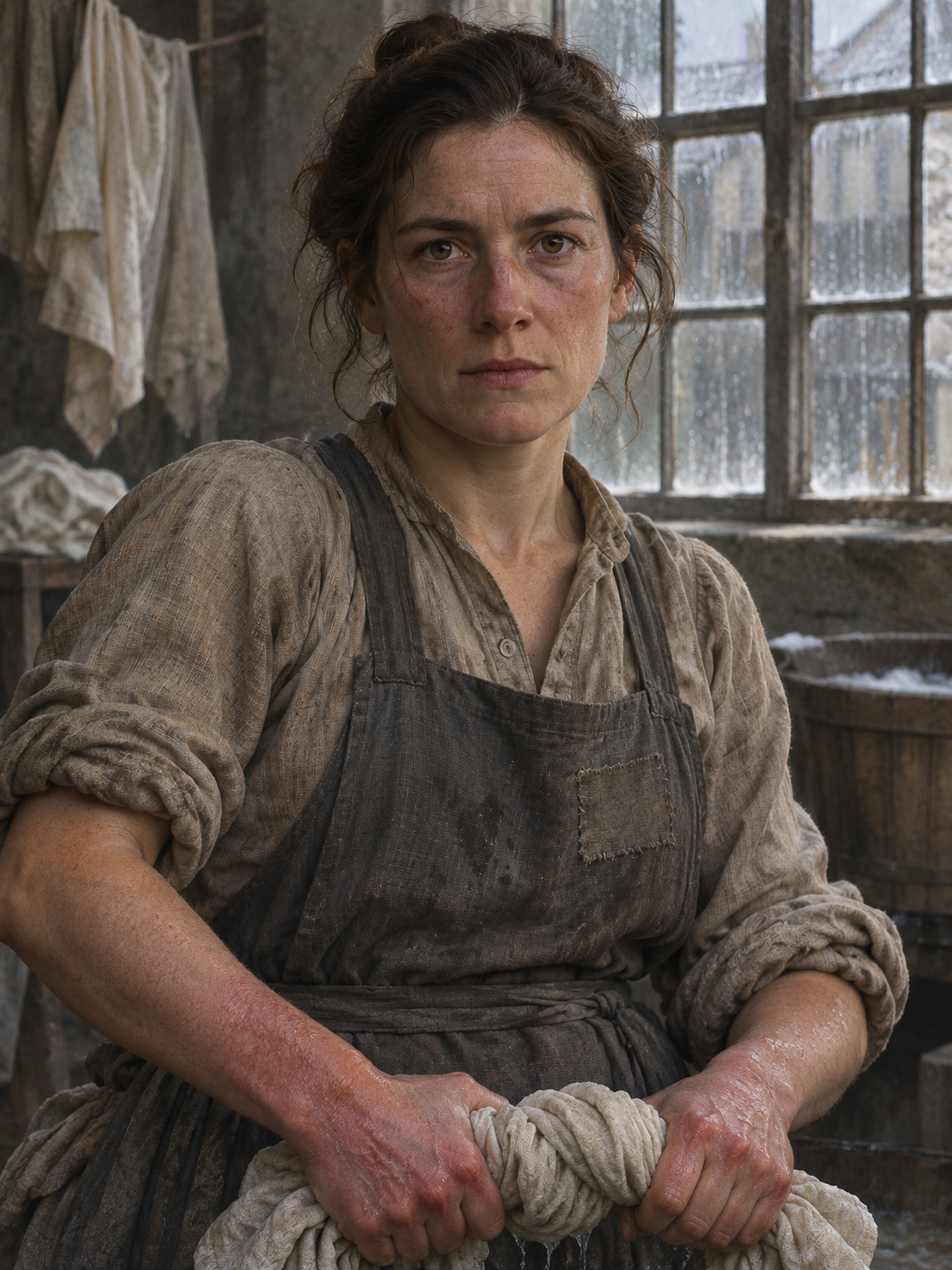
Ruth’s daughter, Helen earns her living washing the town’s linen while raising a child of her own.
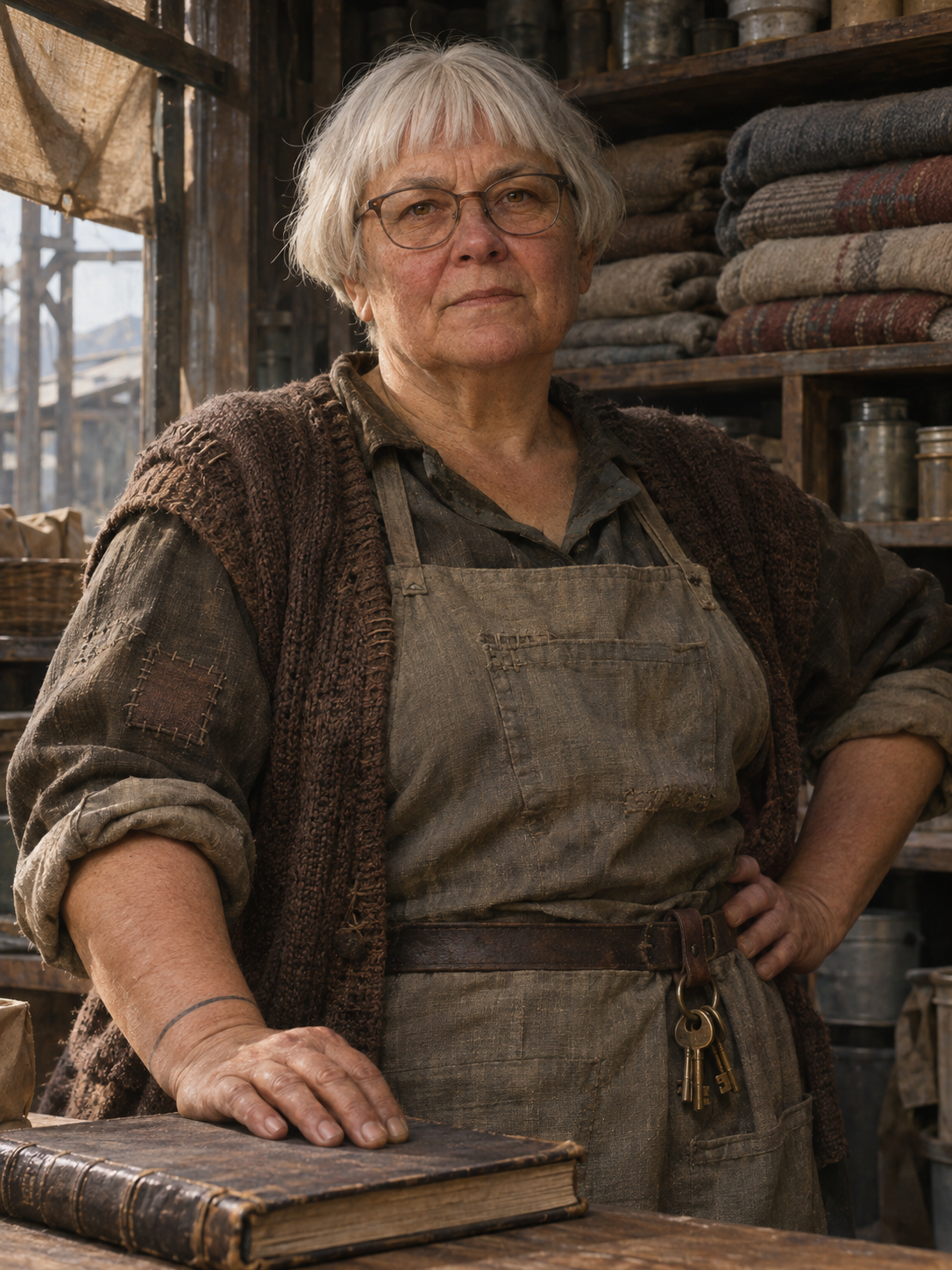
June organises supplies and practical care, with a close knowledge of which households can manage and which need help.
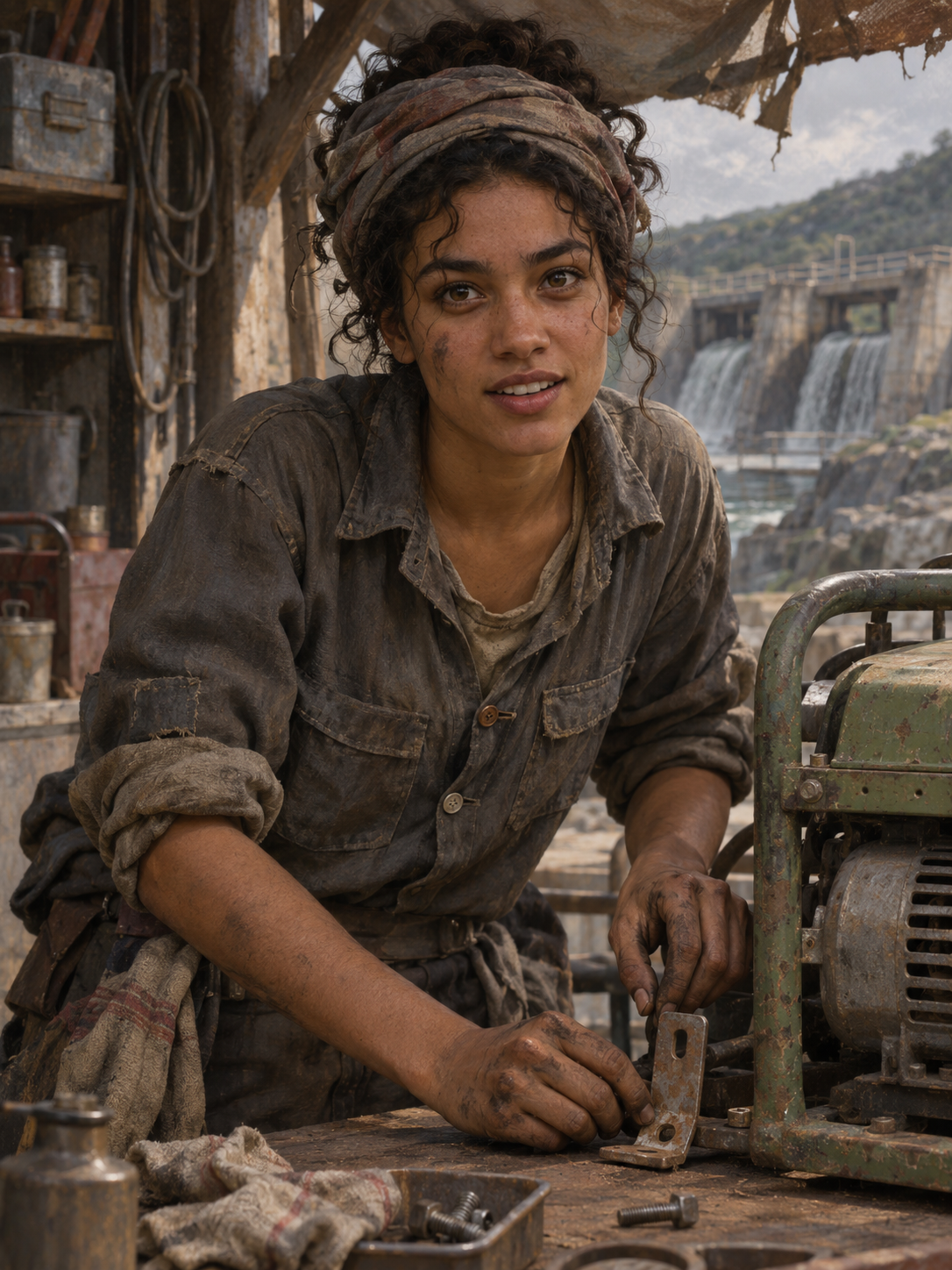
A young mechanic with an exceptional ear for a failing engine, Tessa wants her skill to earn her a place.
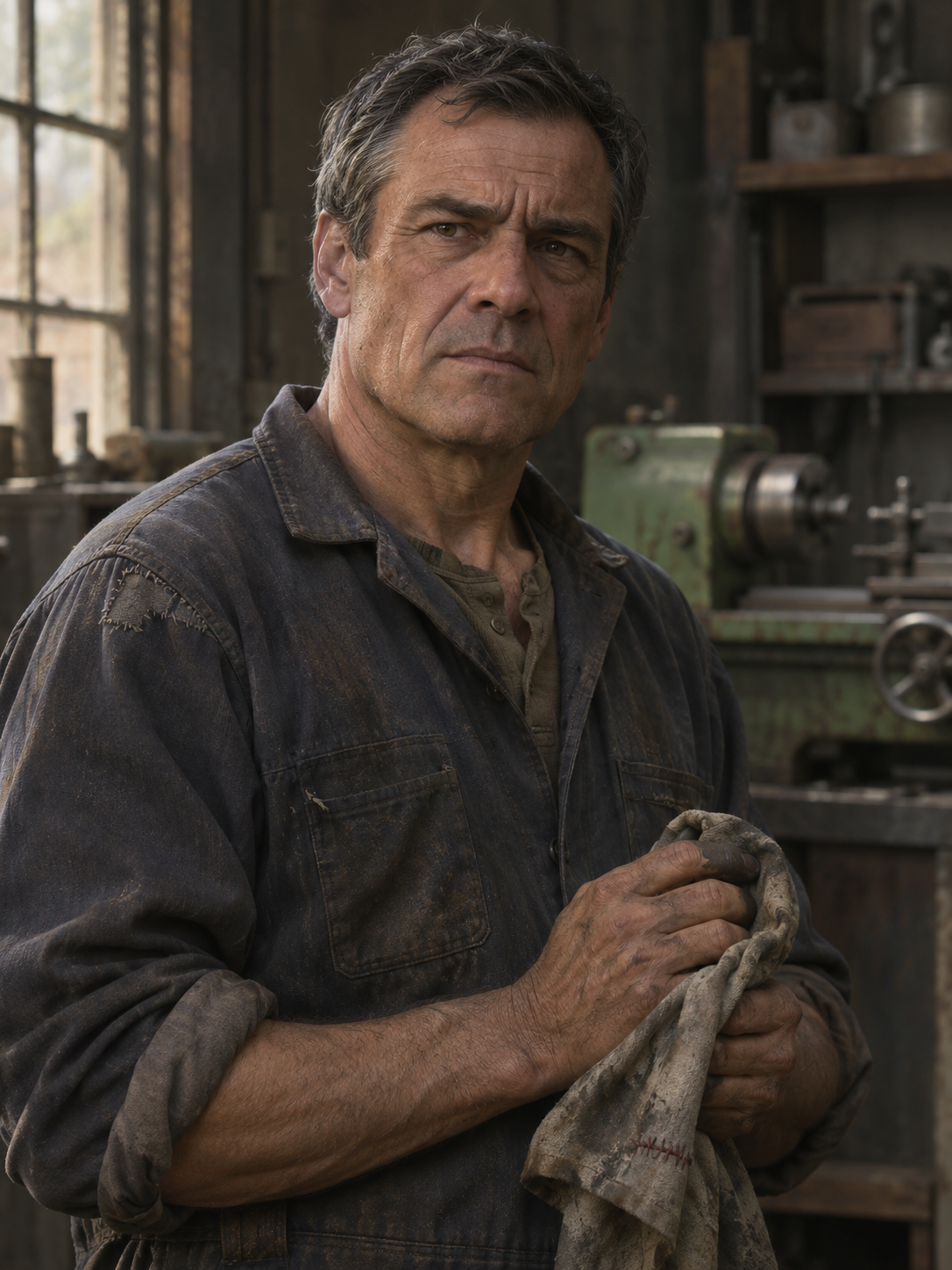
Martin’s workshop supports livelihoods as well as machinery, and every repair arrives amid the claims of a working business.
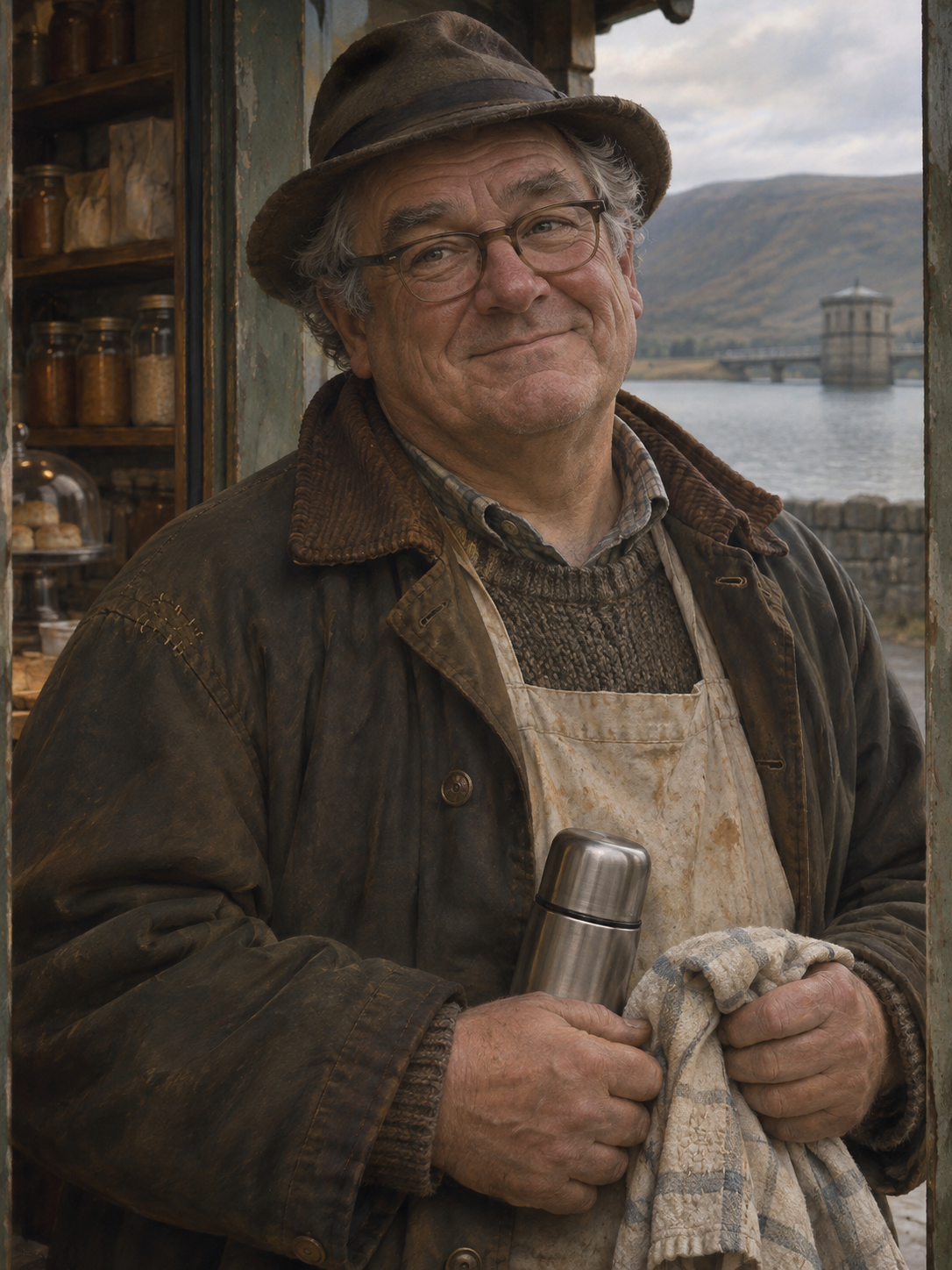
A shopkeeper with dry humour and a long affection for Ruth, Patrick makes care tangible in food, warmth and company.
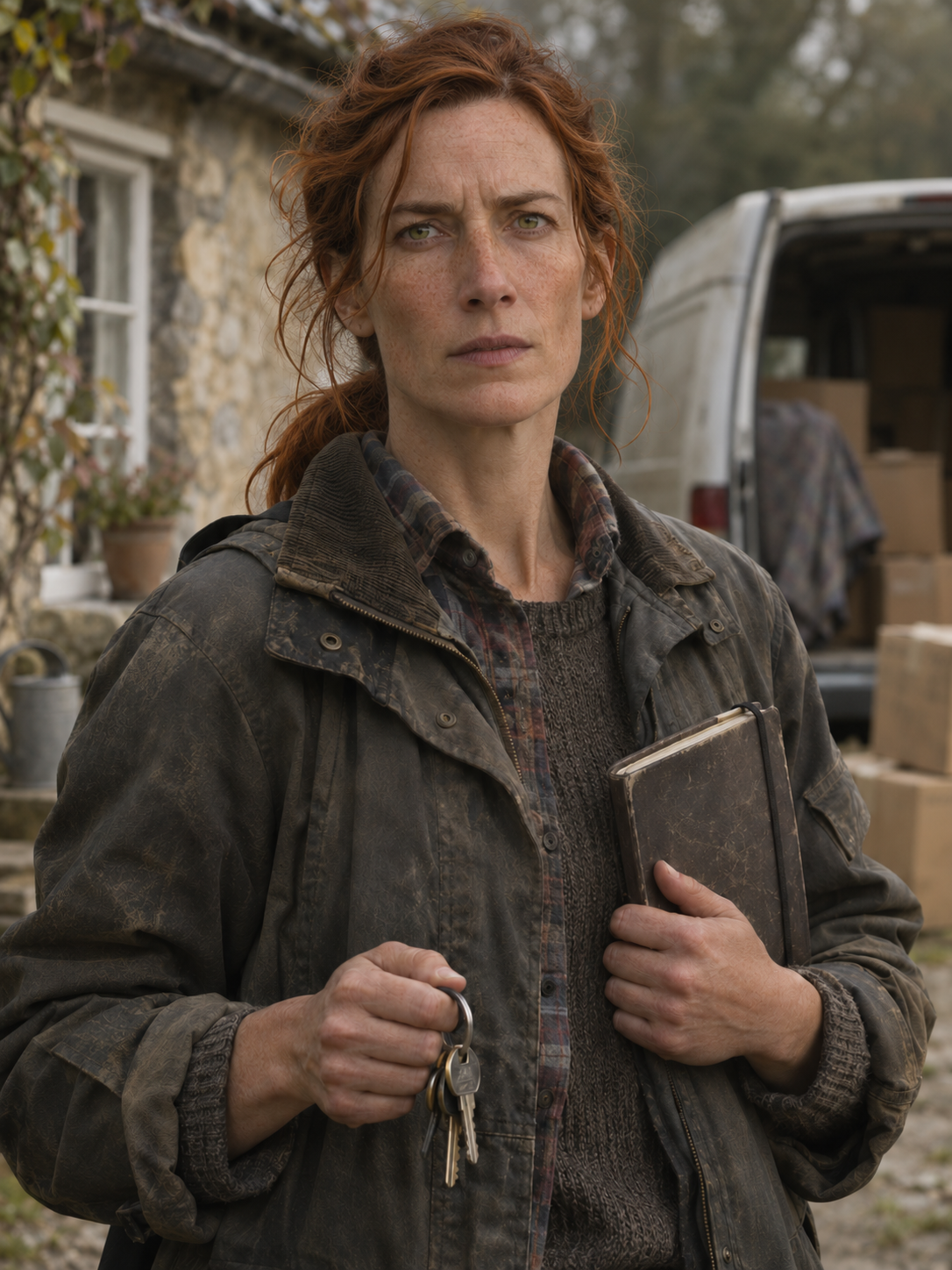
Ada returns to Bellwether to help her ageing father move. She arrives prepared to organise a task that proves difficult to define.
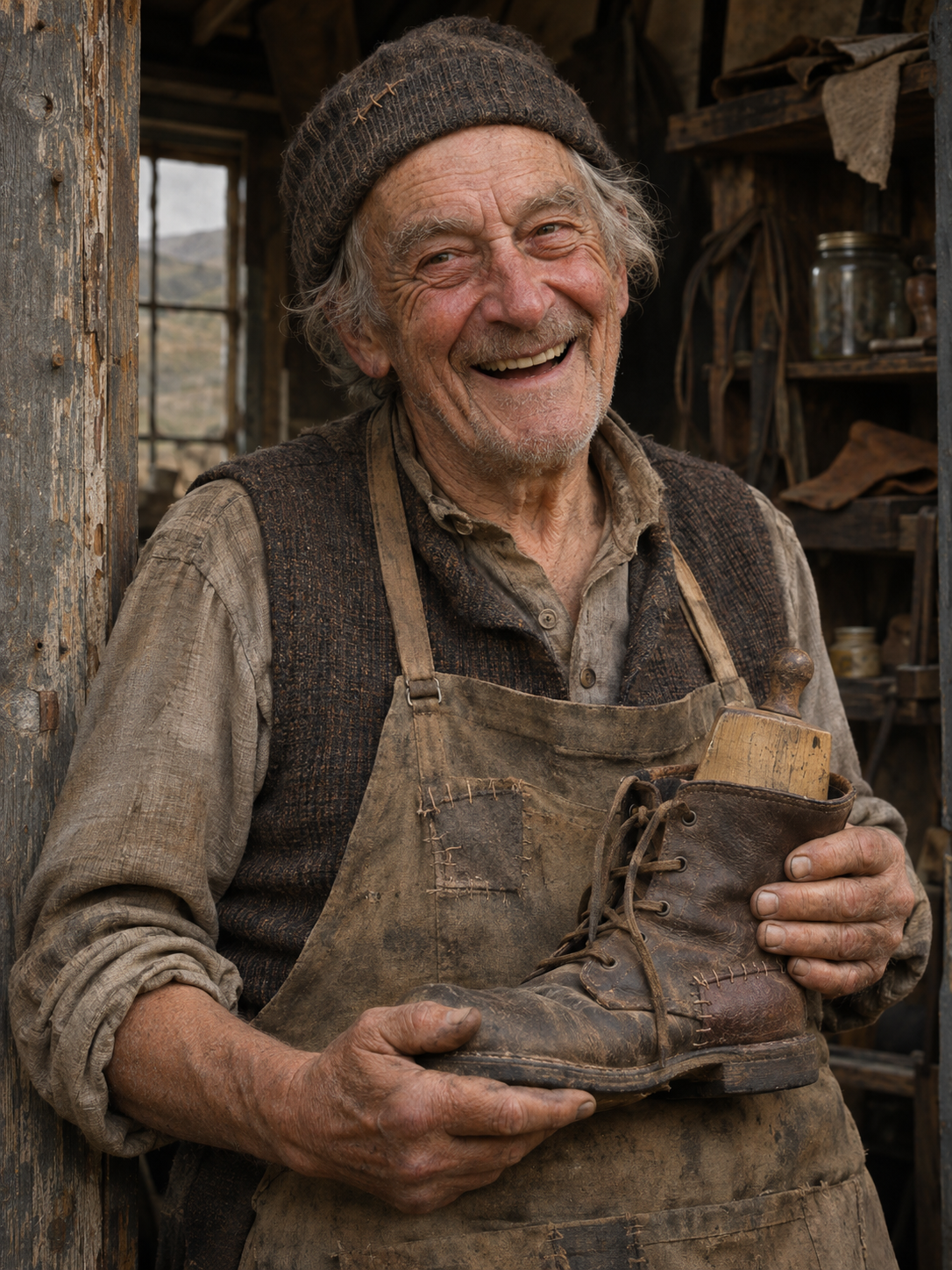
An ageing repairer, Len belongs to a town stitched together by borrowed tools, small jobs and promises still to be kept.
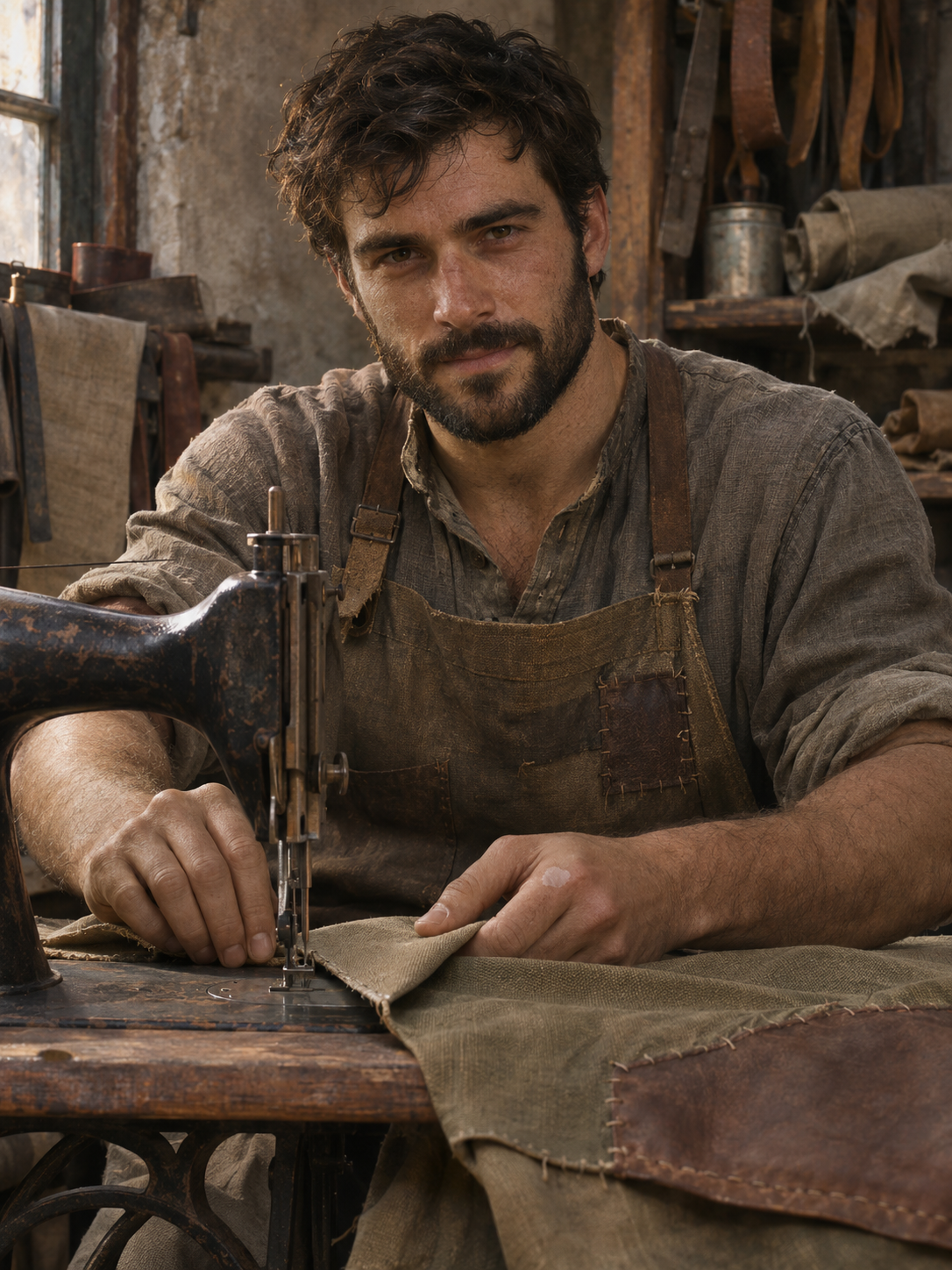
Aled works in canvas and leather, building a livelihood at the machines and benches of Len’s workshop.
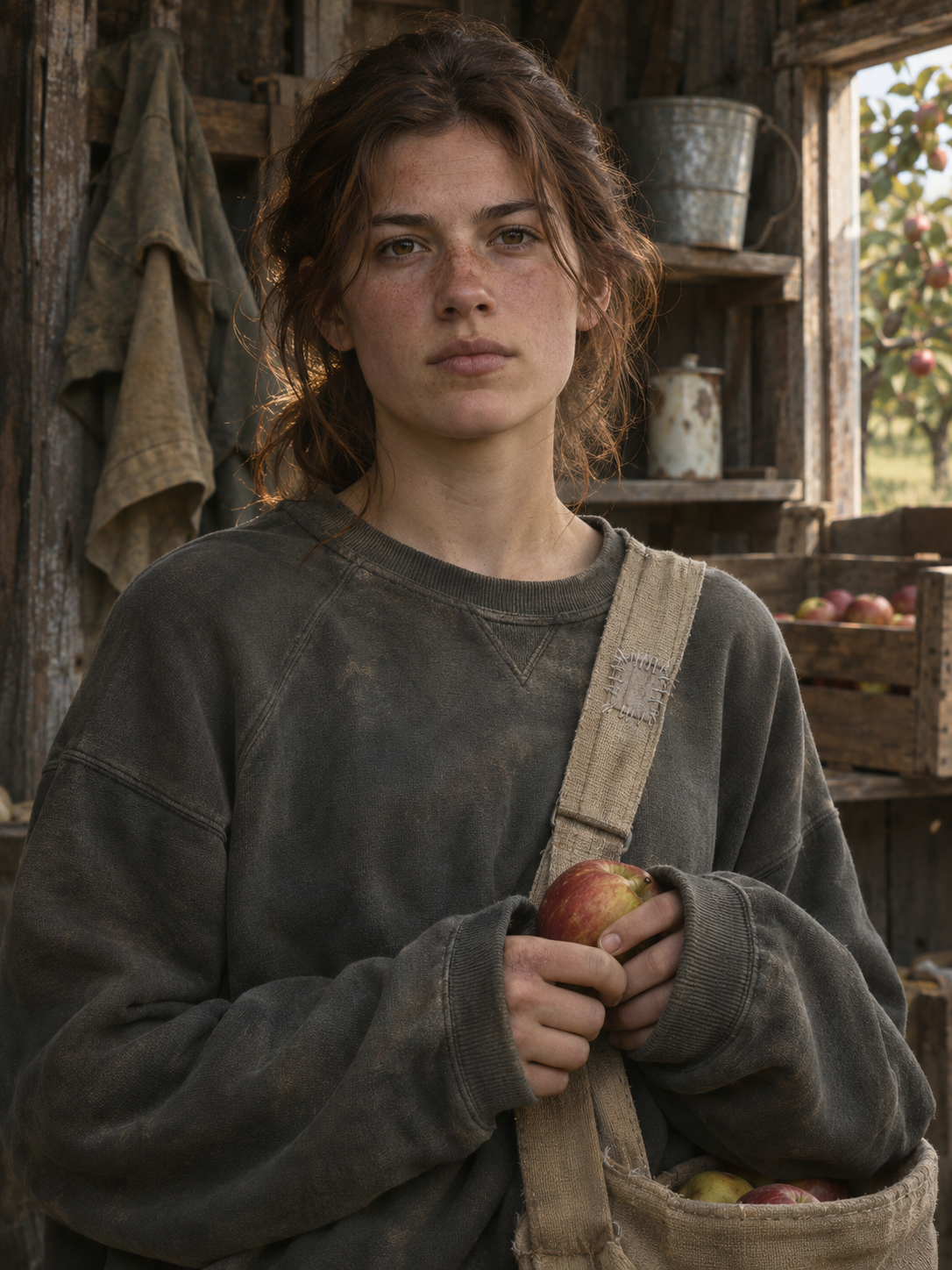
Eighteen-year-old Nell arrives with her mother and discovers that earning a place requires more than deciding to stay.
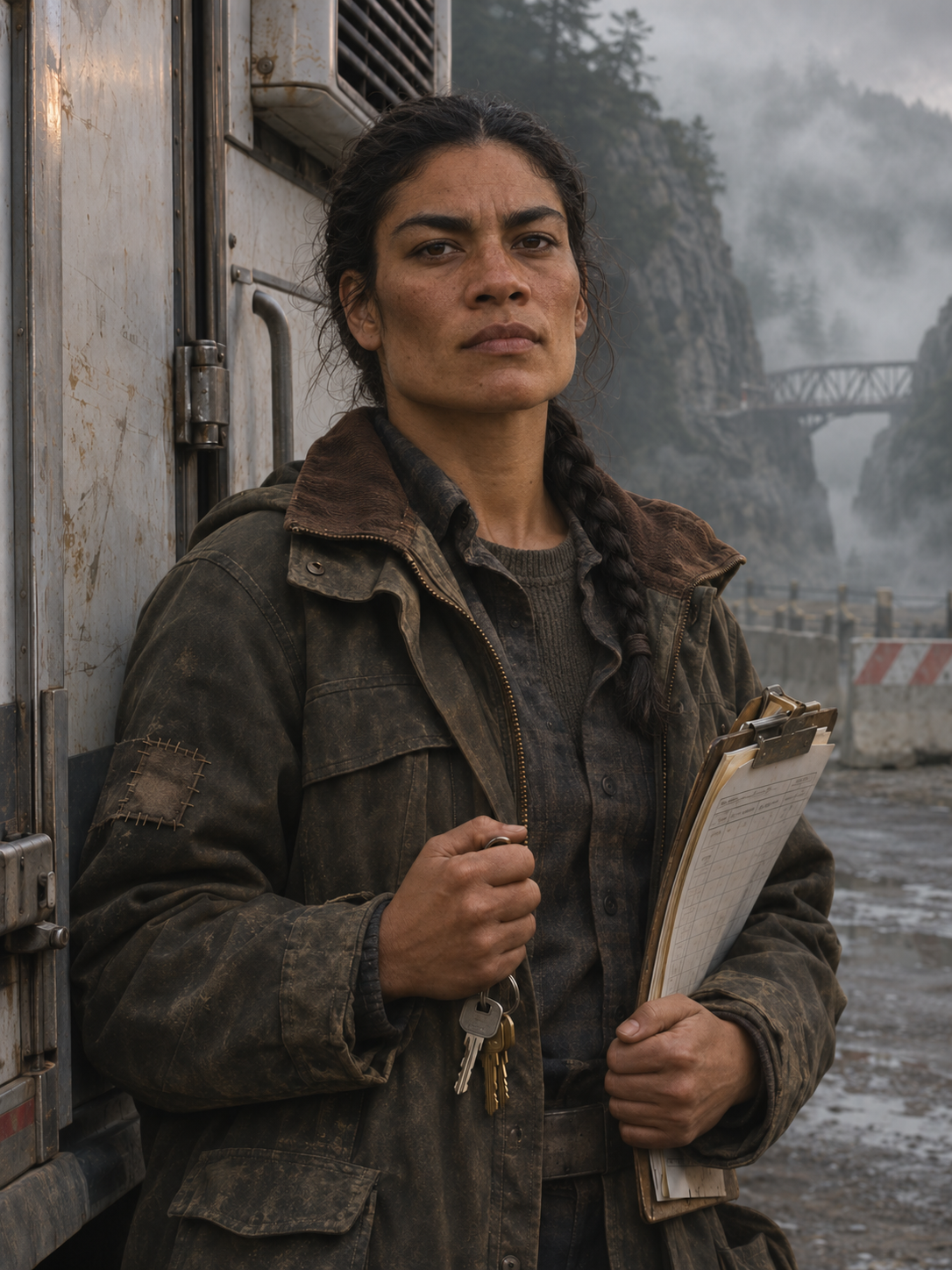
A freight driver carrying medical supplies, Corinne reaches a crossing where access has become a business of its own.
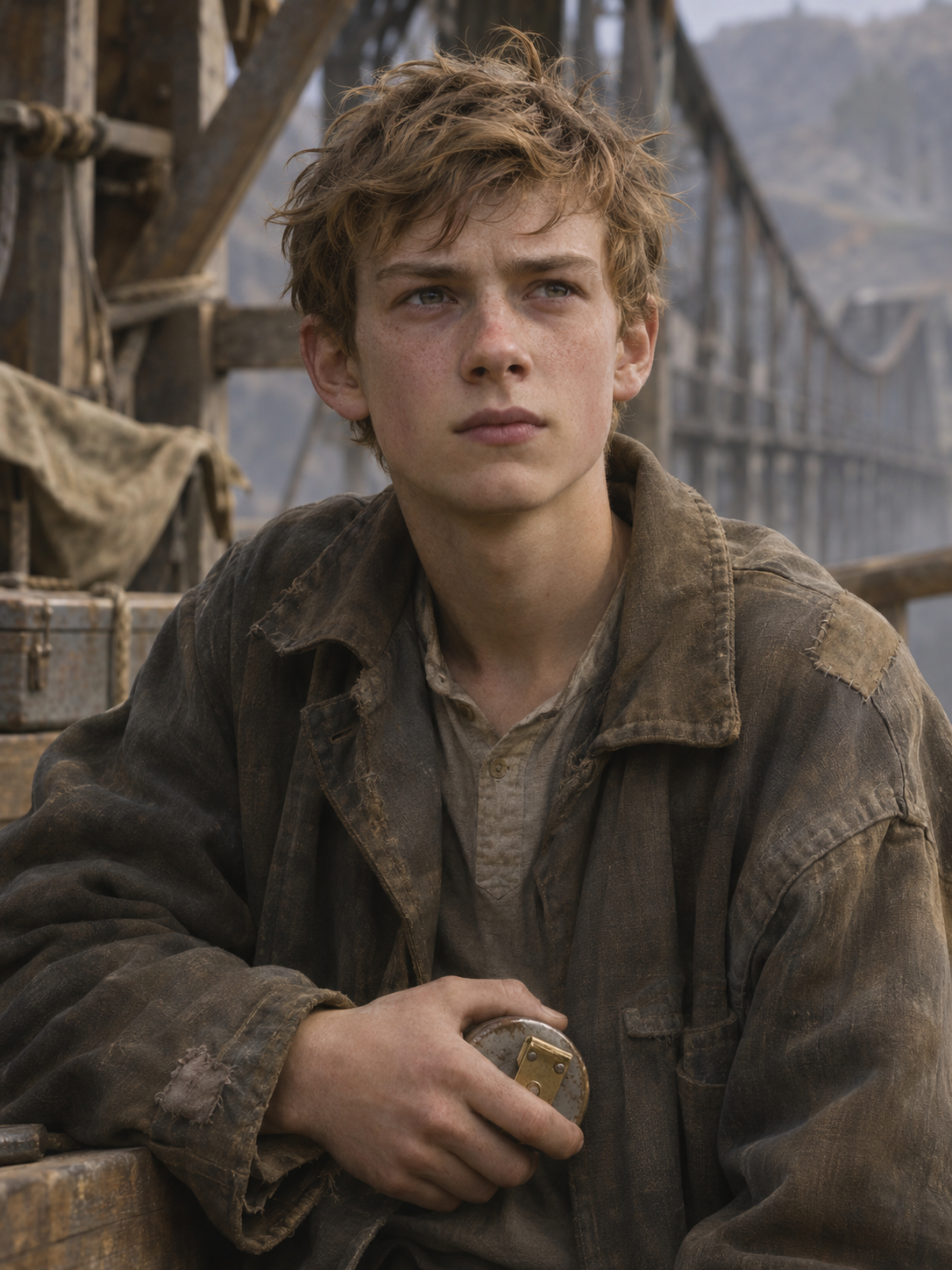
A sixteen-year-old bridge apprentice, Simon trusts measurements—and is learning how much depends on who records them.
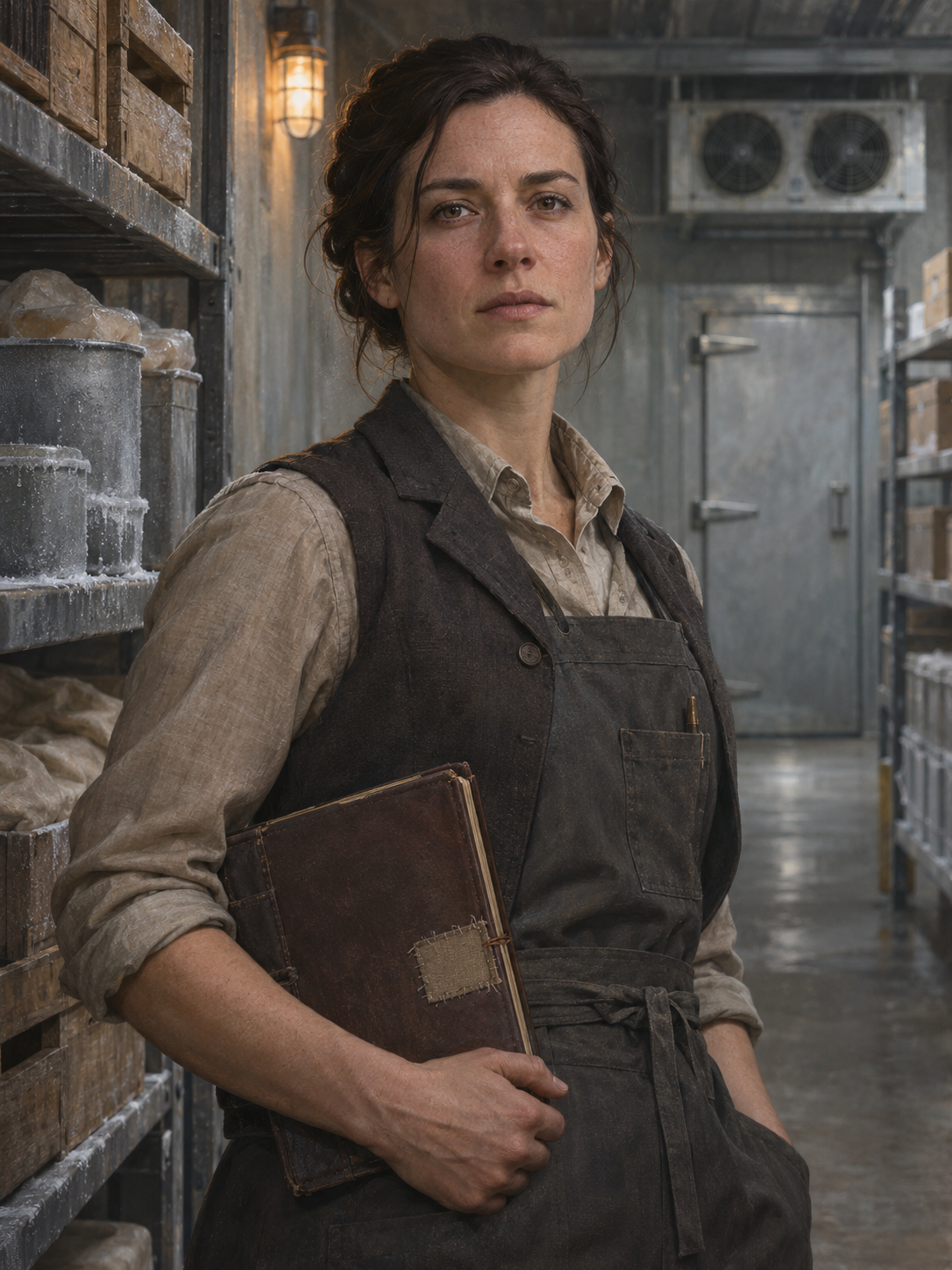
Imogen runs the bonded store with genuine competence, working inside the arrangements her father has helped sustain.

The tollmaster of the Narrows, Walter protects the town through a system whose costs fall unevenly on those passing through.
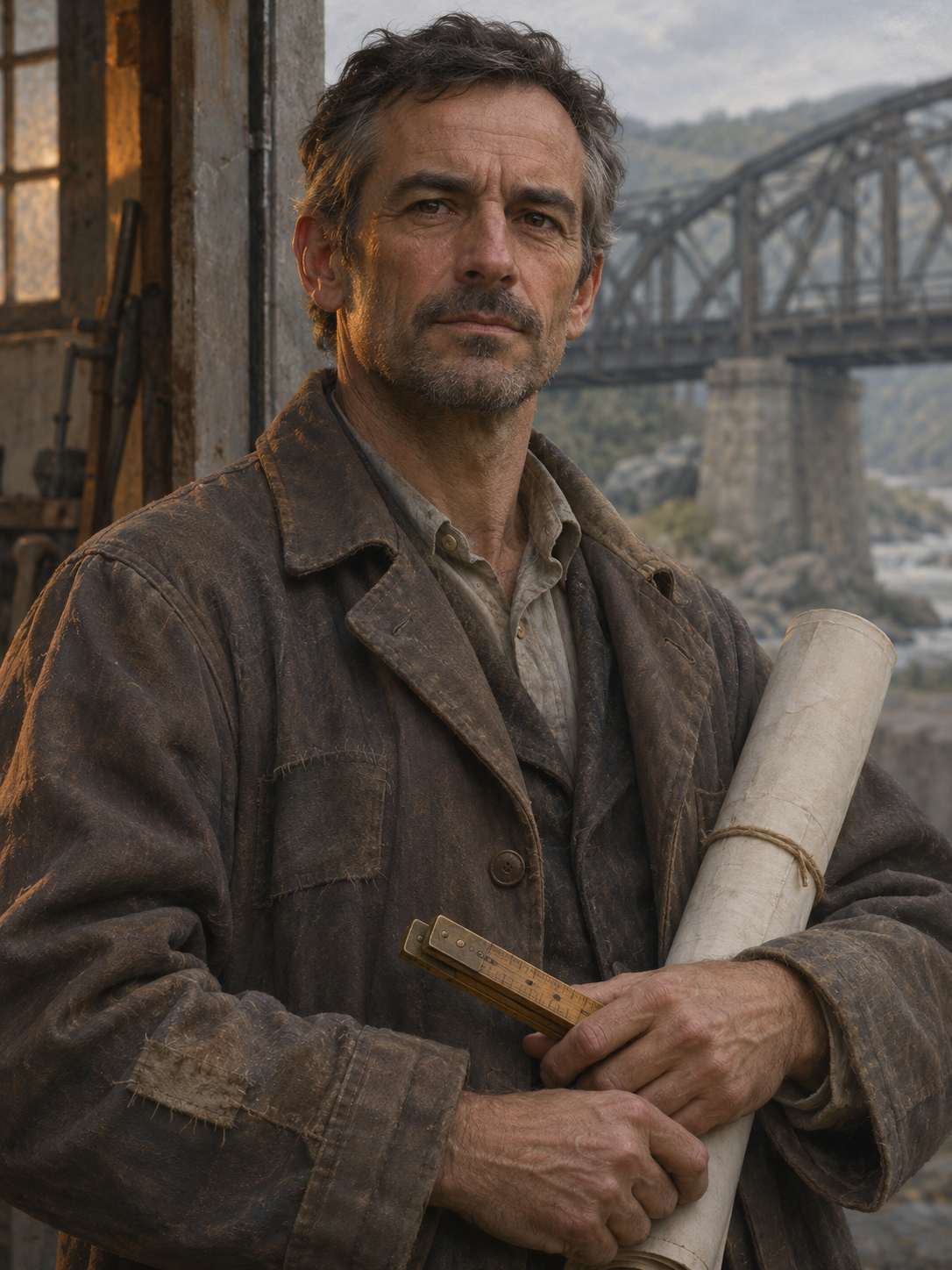
A skilled bridge engineer and gifted teacher, Hugh understands both the structure and the pressures surrounding its inspection.
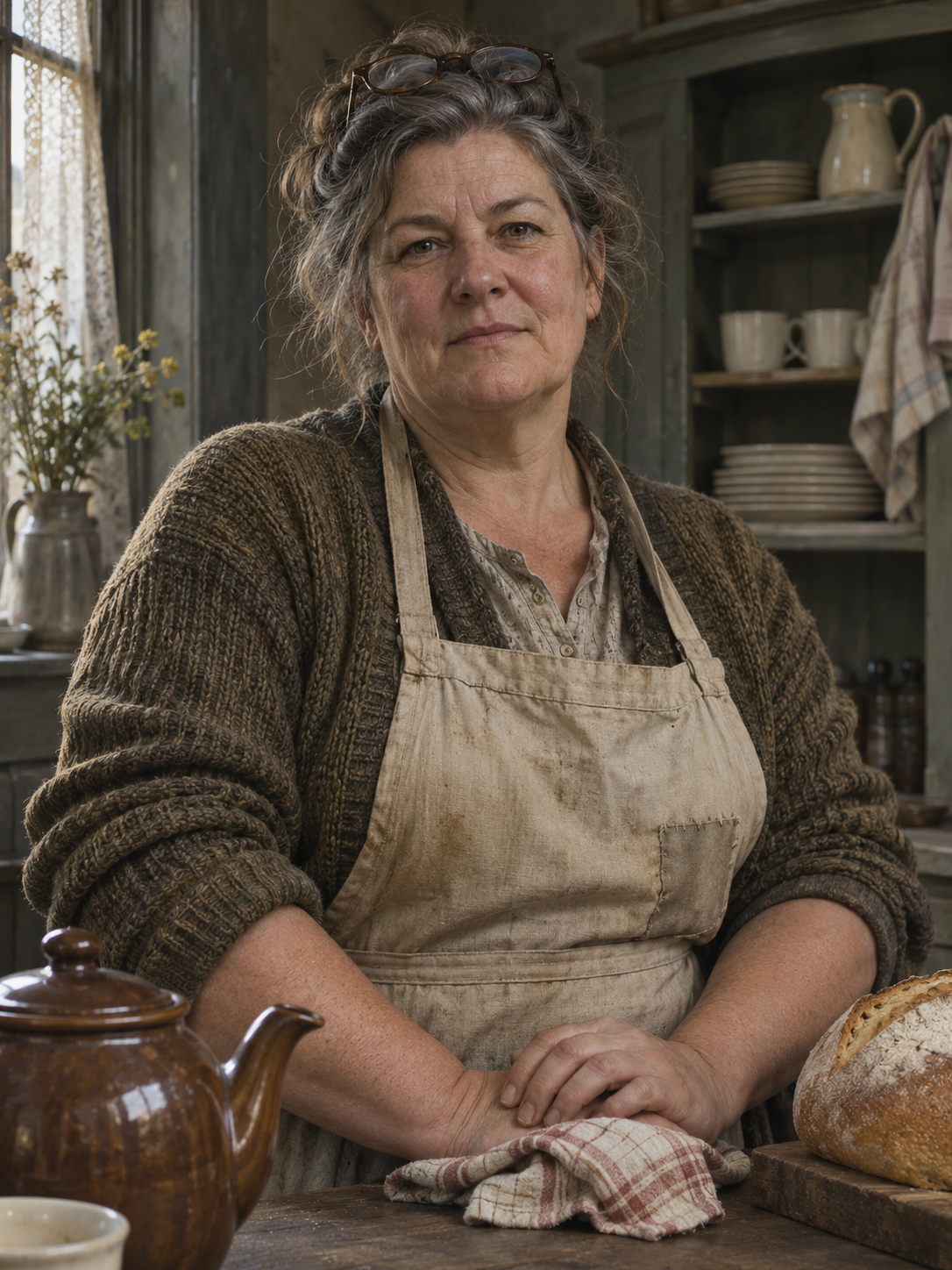
Florence runs a boarding house where breakfast, beds and straightforward advice all have their place.
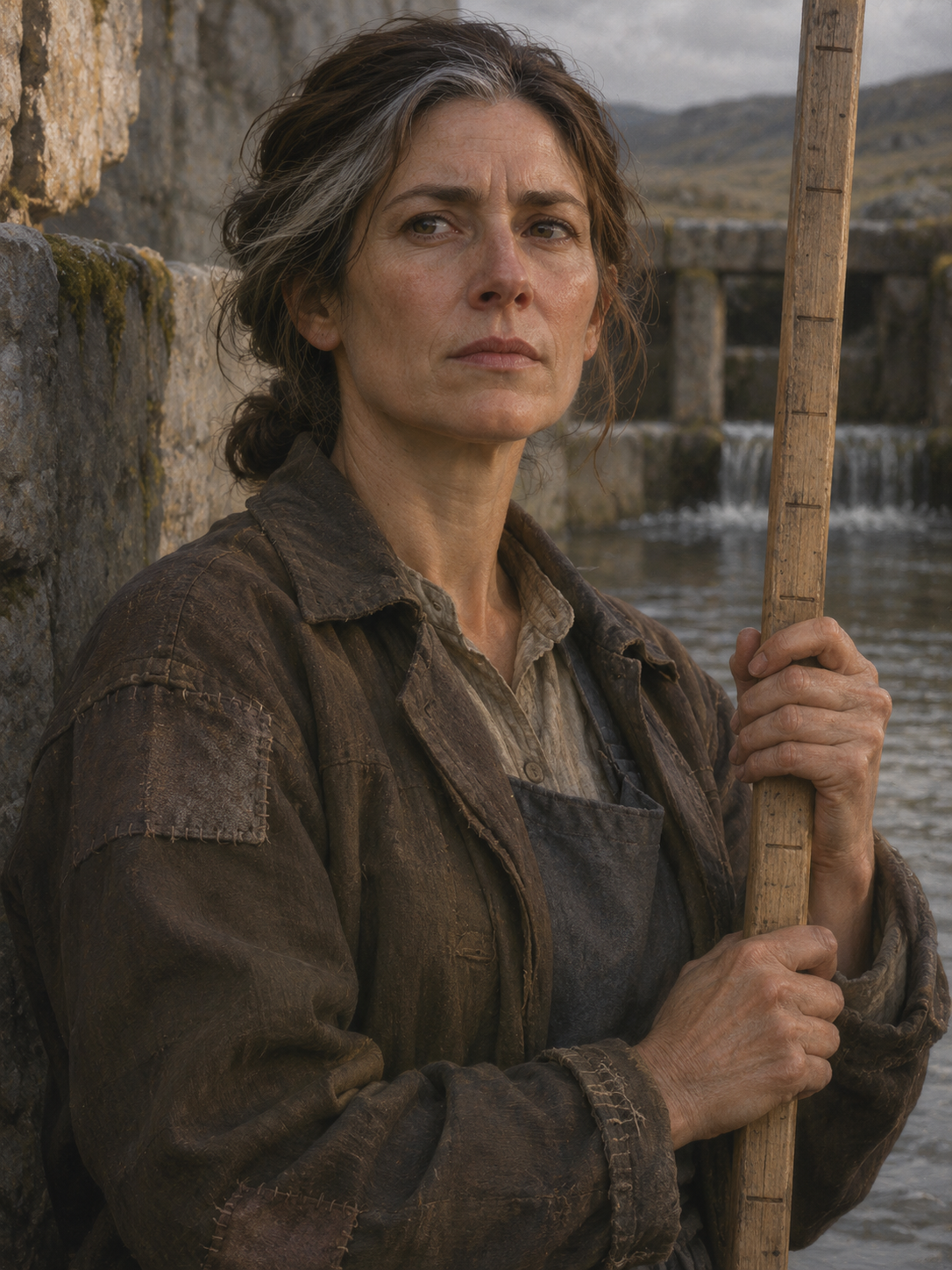
Calder Reach’s water-turn keeper, Alison measures the flow and maintains the book on which the valley’s allocations depend.
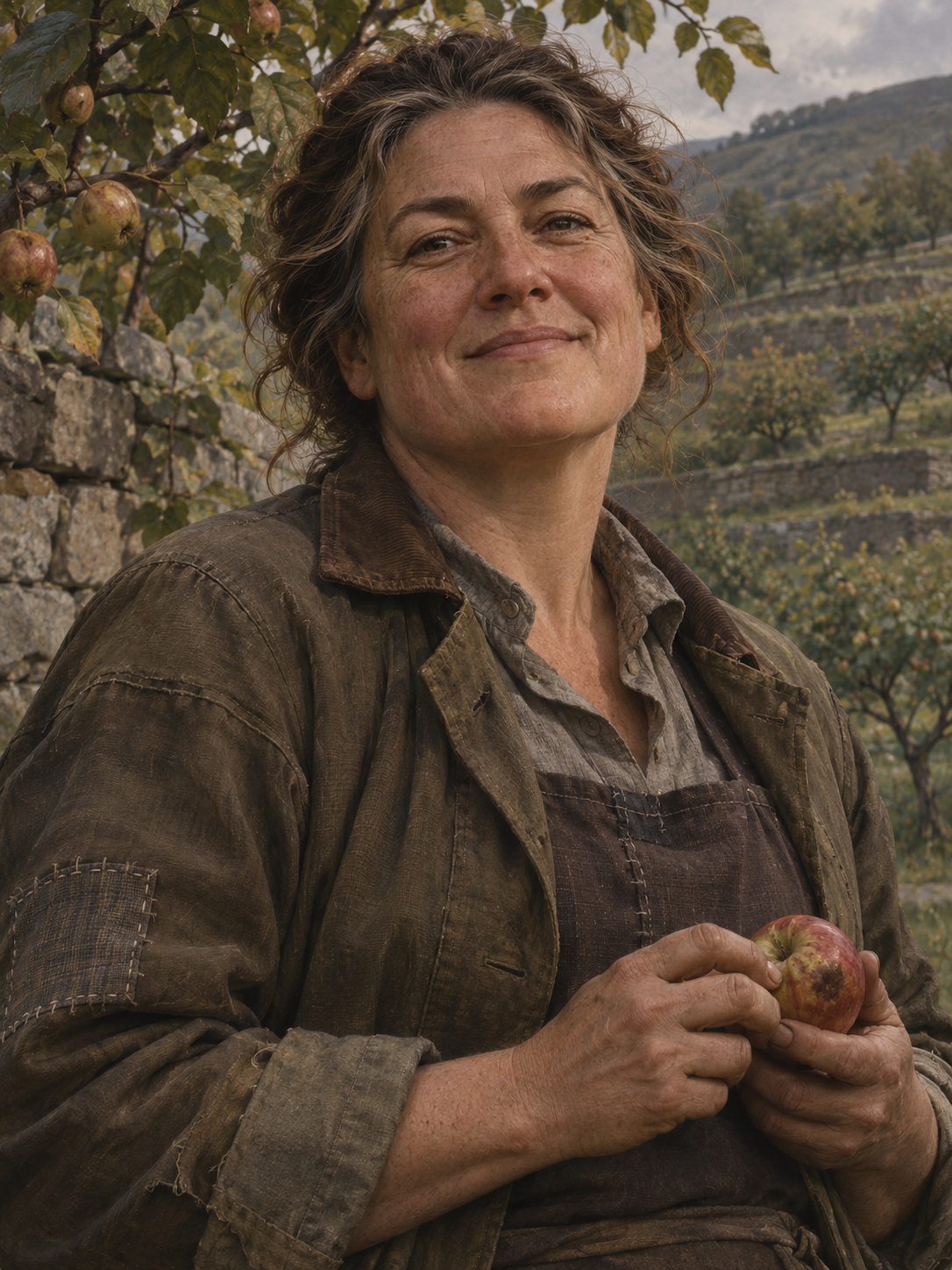
Alison’s older sister, Hester runs the orchards that provide wages—and require more water than the valley can easily spare.
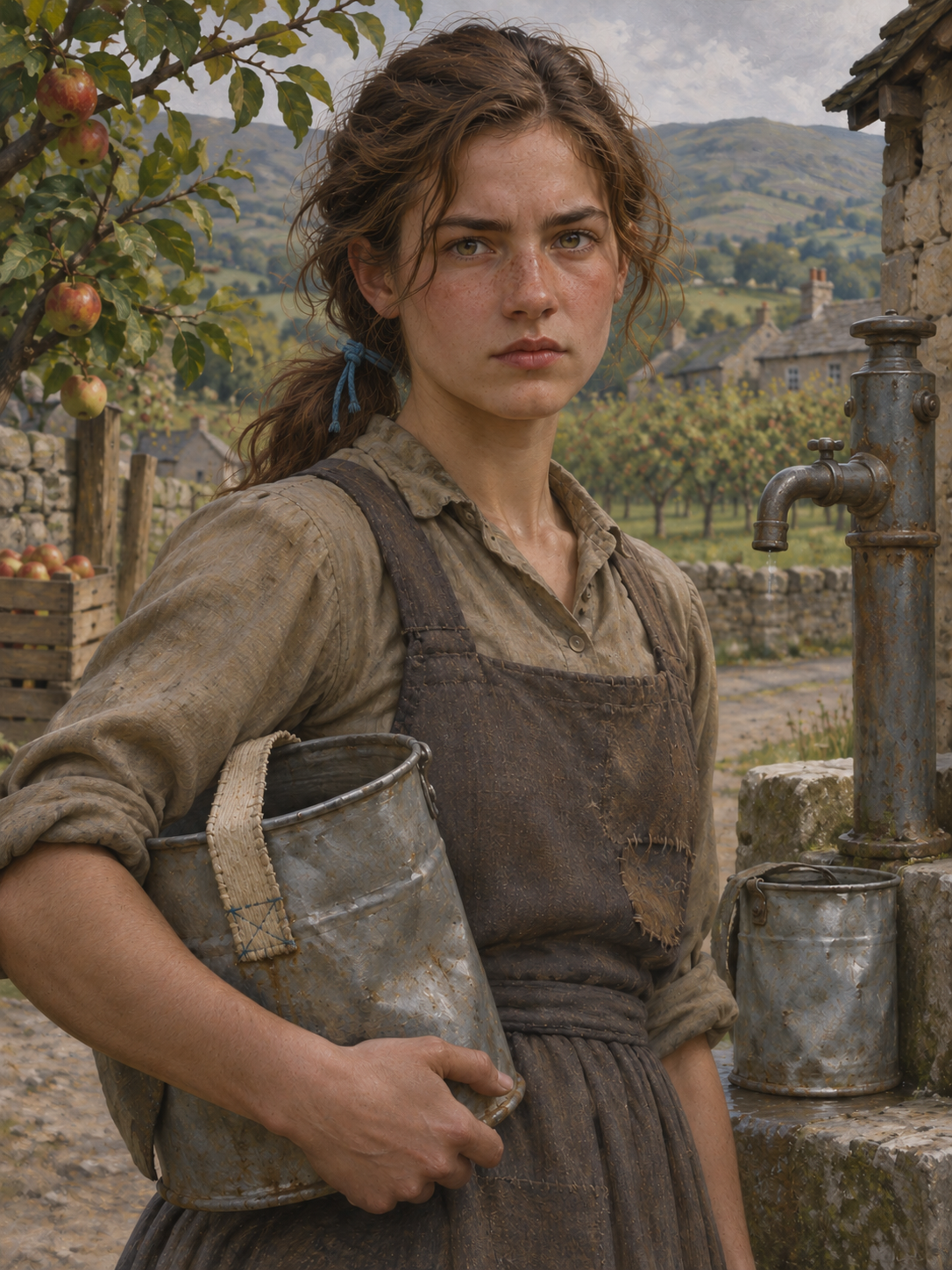
Seventeen-year-old Wren carries the household’s water and brings an unsparing eye to the rules adults ask her to accept.
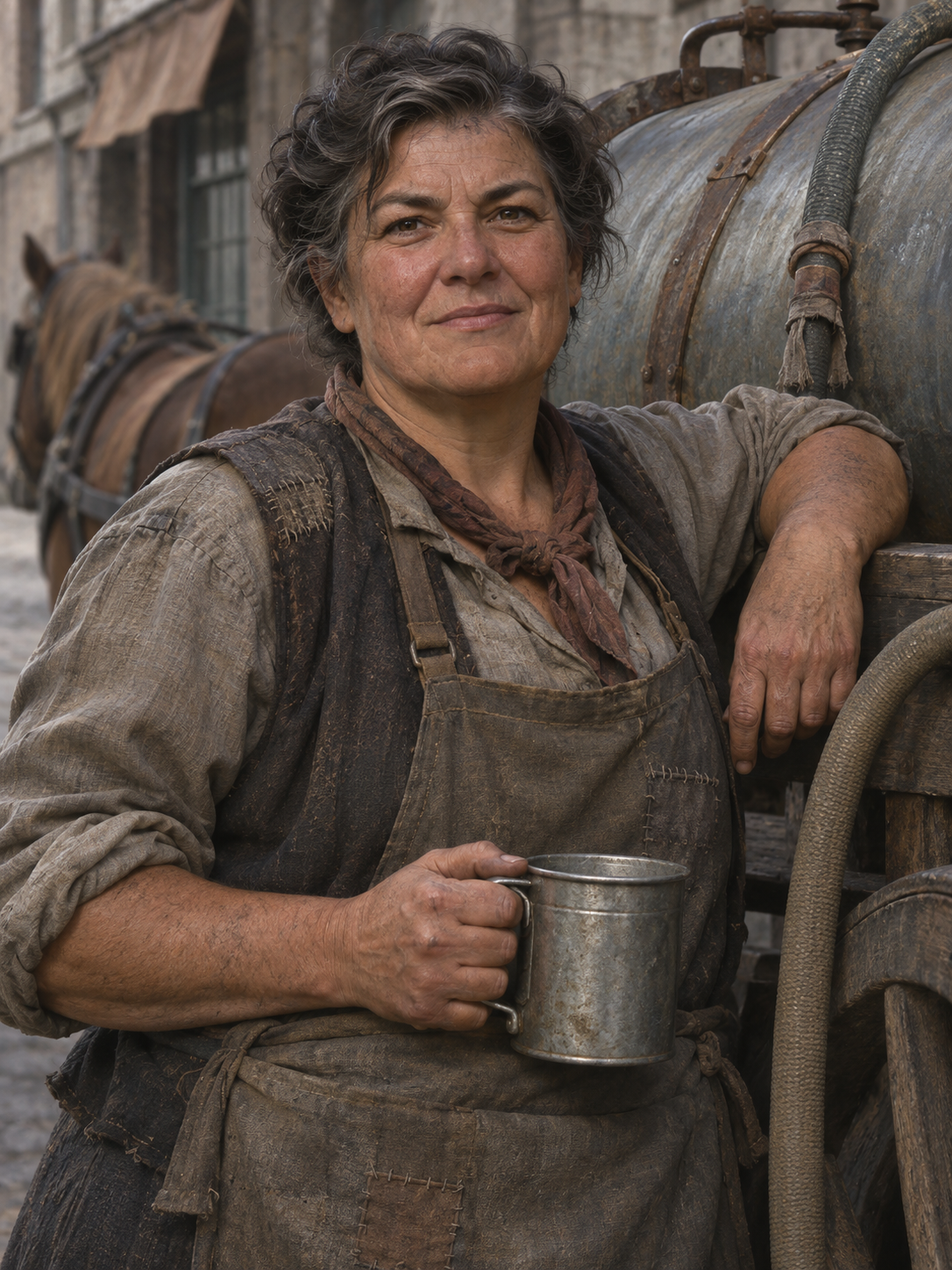
Katherine carries water to the people least able to fetch it and knows how much a nominal allowance leaves out.
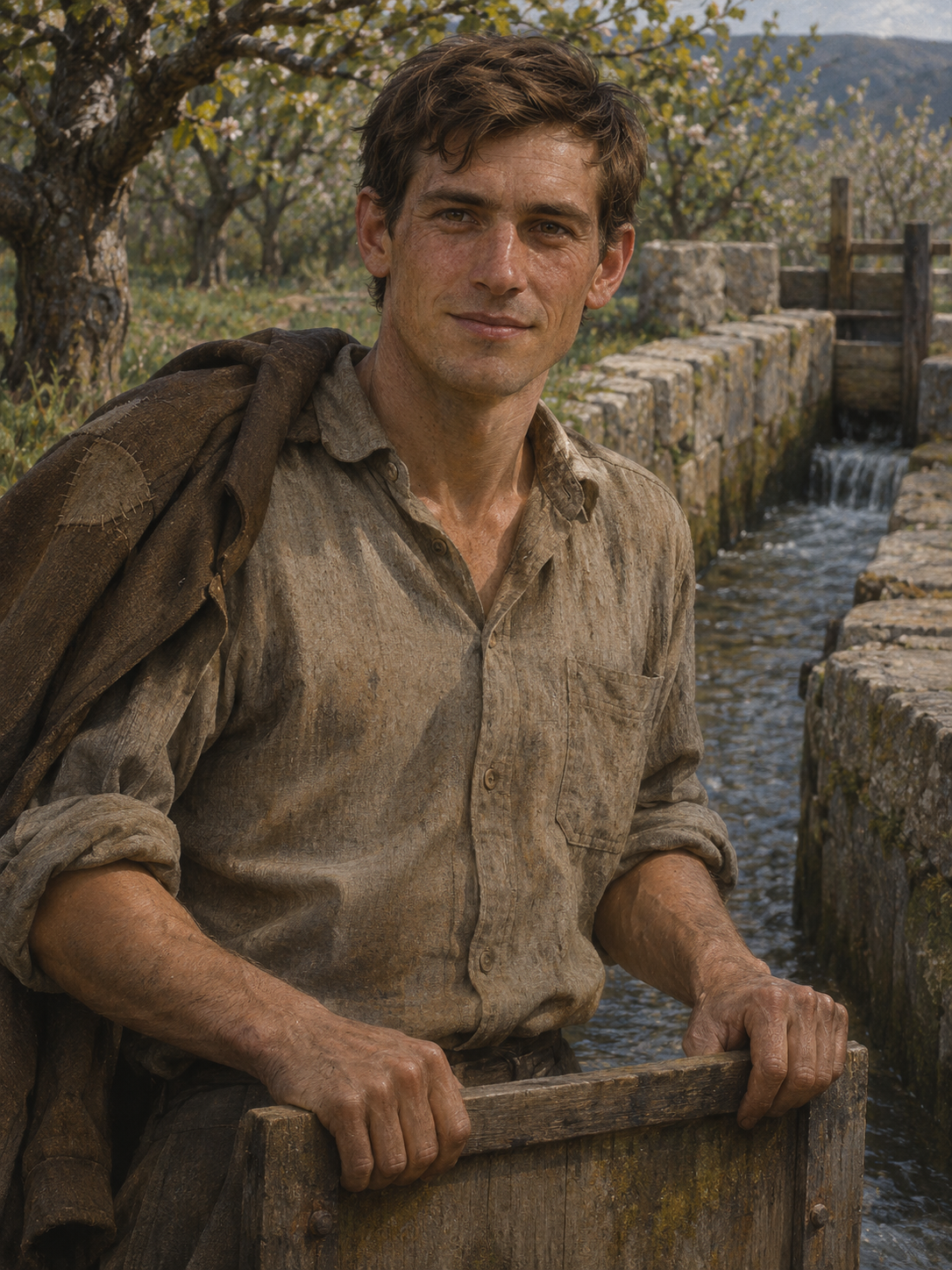
An observant irrigation worker, Rory keeps the orchard races functioning while supporting a younger brother away at school.
Portraits are artistic interpretations.