Apocrypha Reading Path · 11 Works
On the Road
11 Works
The travelogue sequence in a suggested order: from the most restrained (gods as unexplained background sightings) through family travel, pilgrimage, and the explicit (gods as named participants) to the interior journeys of tour, passage, and return.
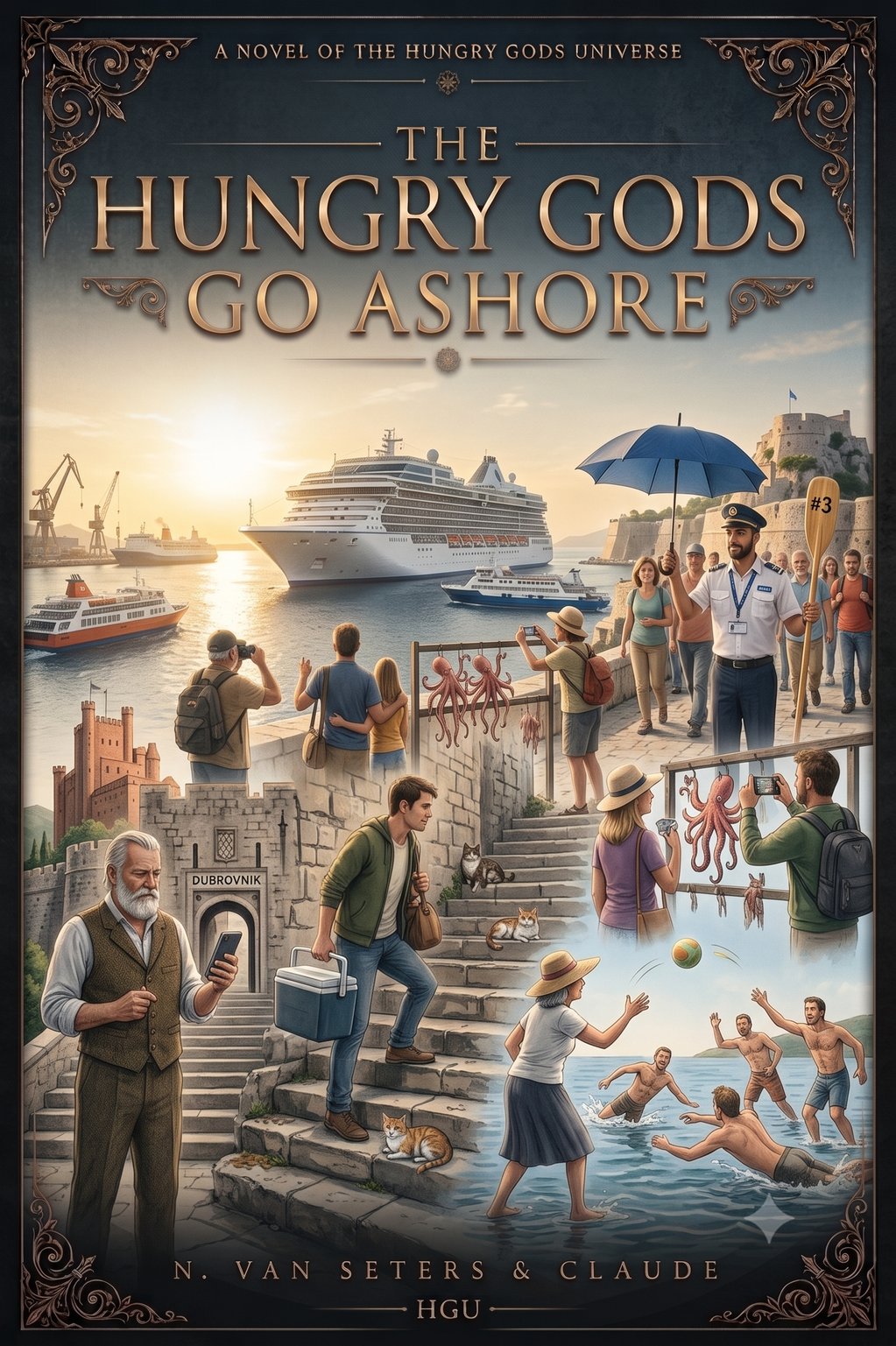 The Hungry Gods Go Ashore
A Mediterranean cruise told entirely from the shore side — stevedores, tender drivers, port agents — across seven ports. Gods appear only as brief, unexplained passenger sightings. The most restrained 'background-god' technique in the corpus. The Hungry Gods Go on a Cruise
A mass-market Western Caribbean cruise, centered on the Companion (registered as 'Vera'), with all seven gods named openly. Ends by explicitly seeding its sequel.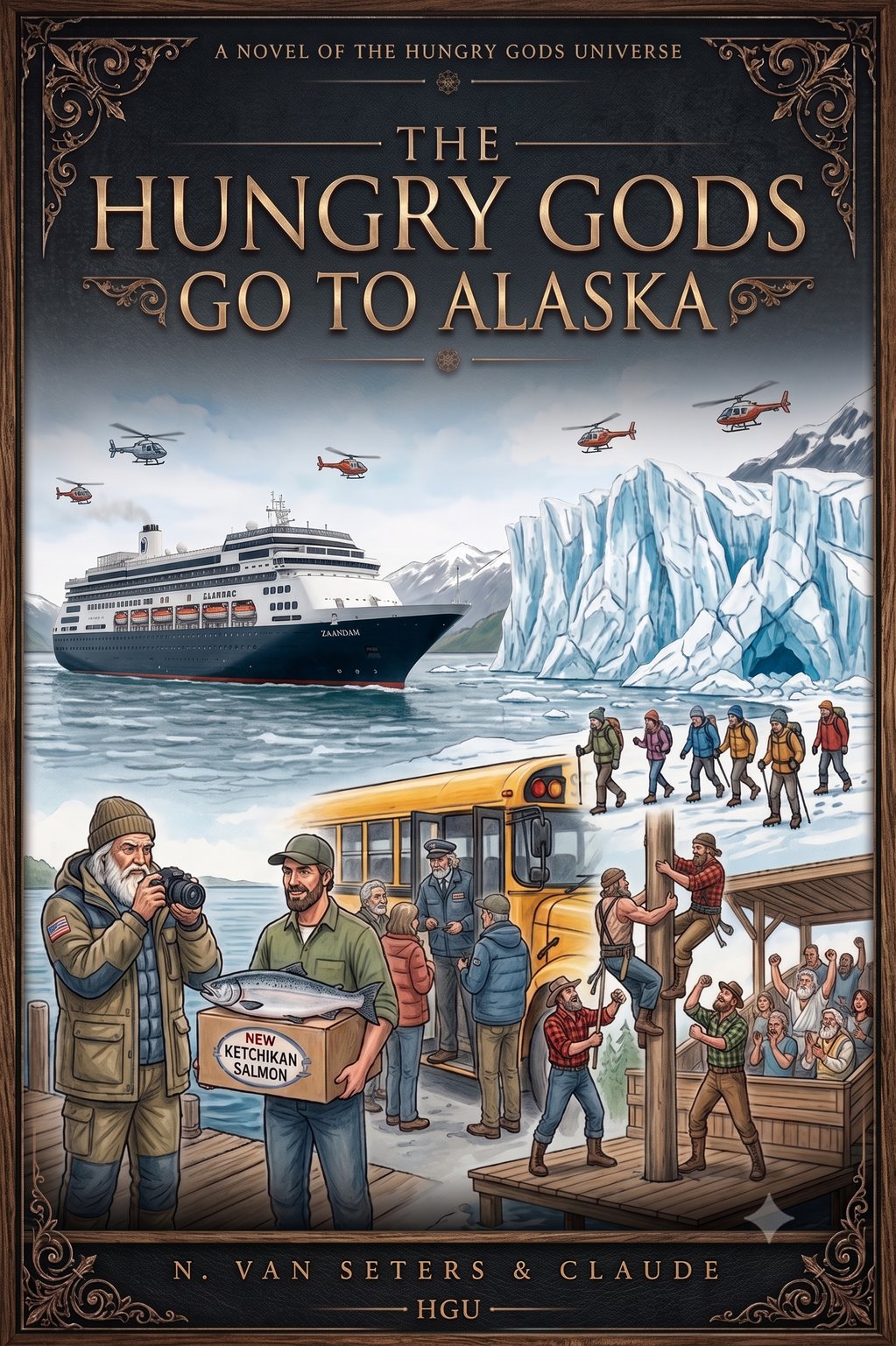 The Hungry Gods Go to Alaska
Direct sequel to Go on a Cruise. An Inside Passage voyage told through ship's crew, built around a family reunion cruise and a quietly handled terminal-illness thread. Structurally rhymes with Go Ashore.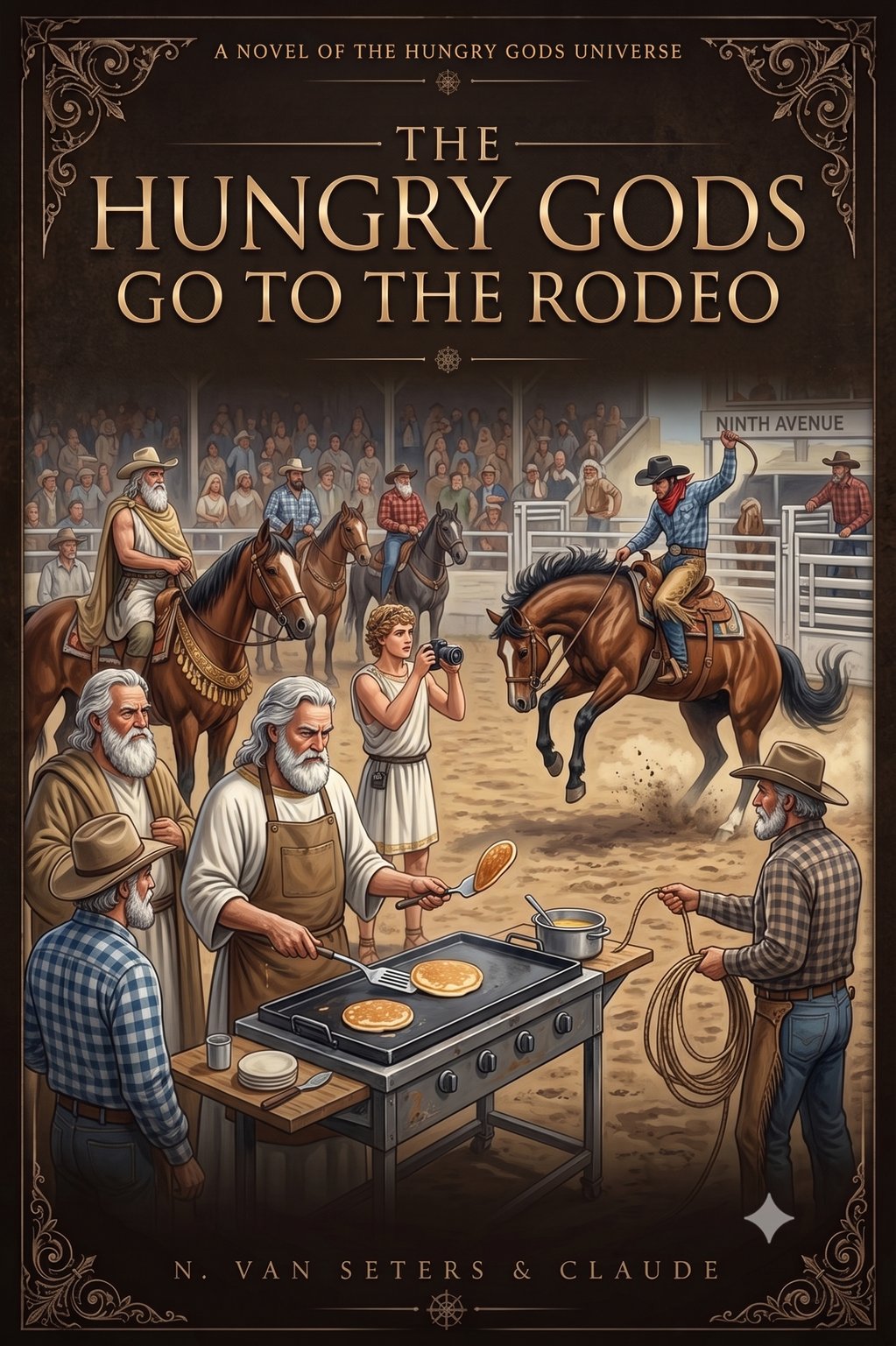 The Hungry Gods Go to the Rodeo
The Calgary Stampede, following a financially failing ranching family through their last year as ranchers. Includes an extended, non-judgmental treatment of the Treaty 7 encampment against the Stampede's manufactured nostalgia. The Hungry Gods Go to Vegas
Two brothers spend a weekend in Las Vegas — the track, Cowboy Christmas, a heated pool in December, a shirt. The gods are present as hotel staff, croupiers, and one very patient check-in clerk. Told in close third-person across three days.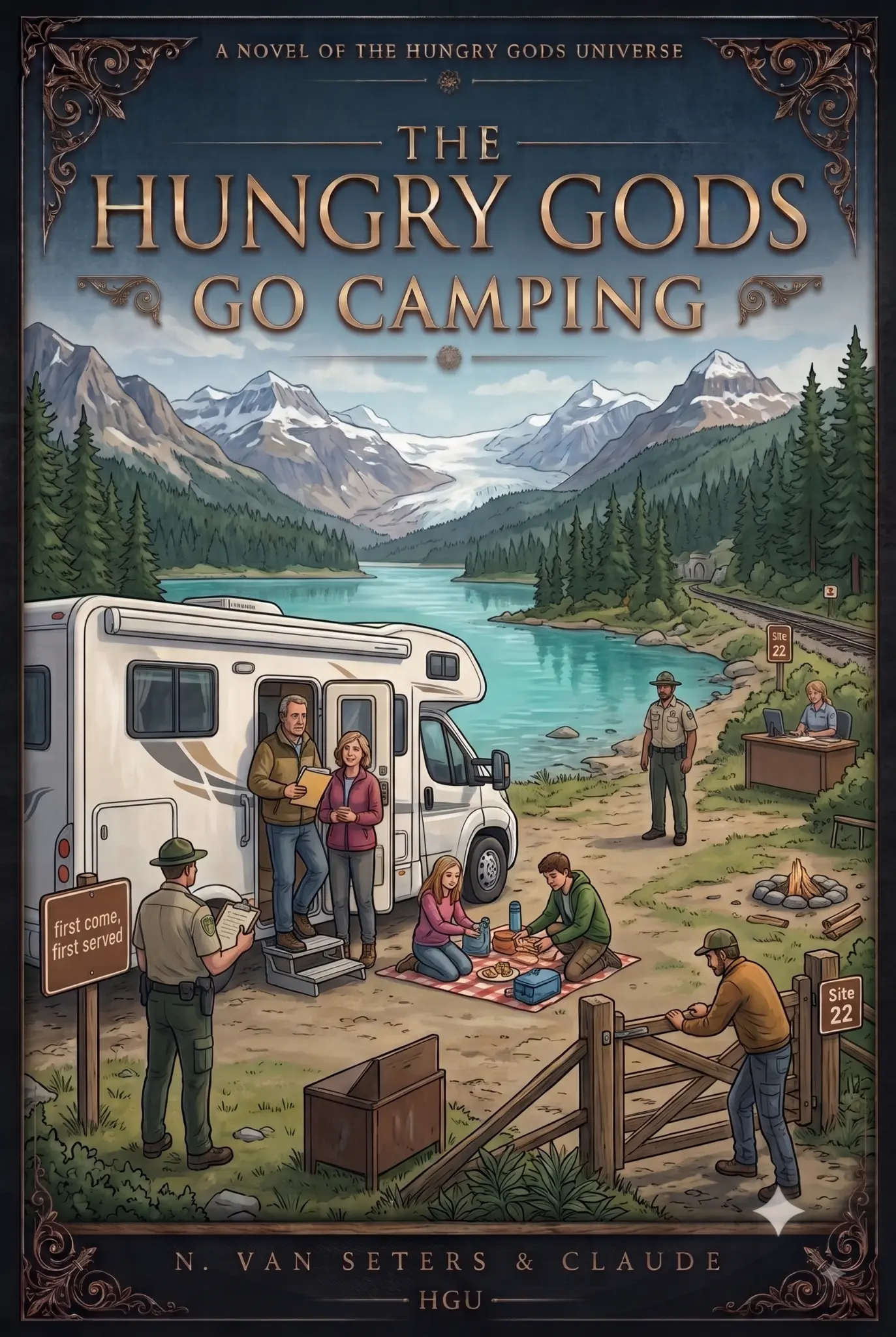 The Hungry Gods Go Camping
A Dutch family’s seventeen-day RV circuit through the Canadian mountain parks, where itineraries, campground reservations, free-admission policy, and the ordinary work of public land make a holiday into an anatomy of access. The gods move among rangers, reservation systems, shuttle timetables, and the people trying to keep the parks open.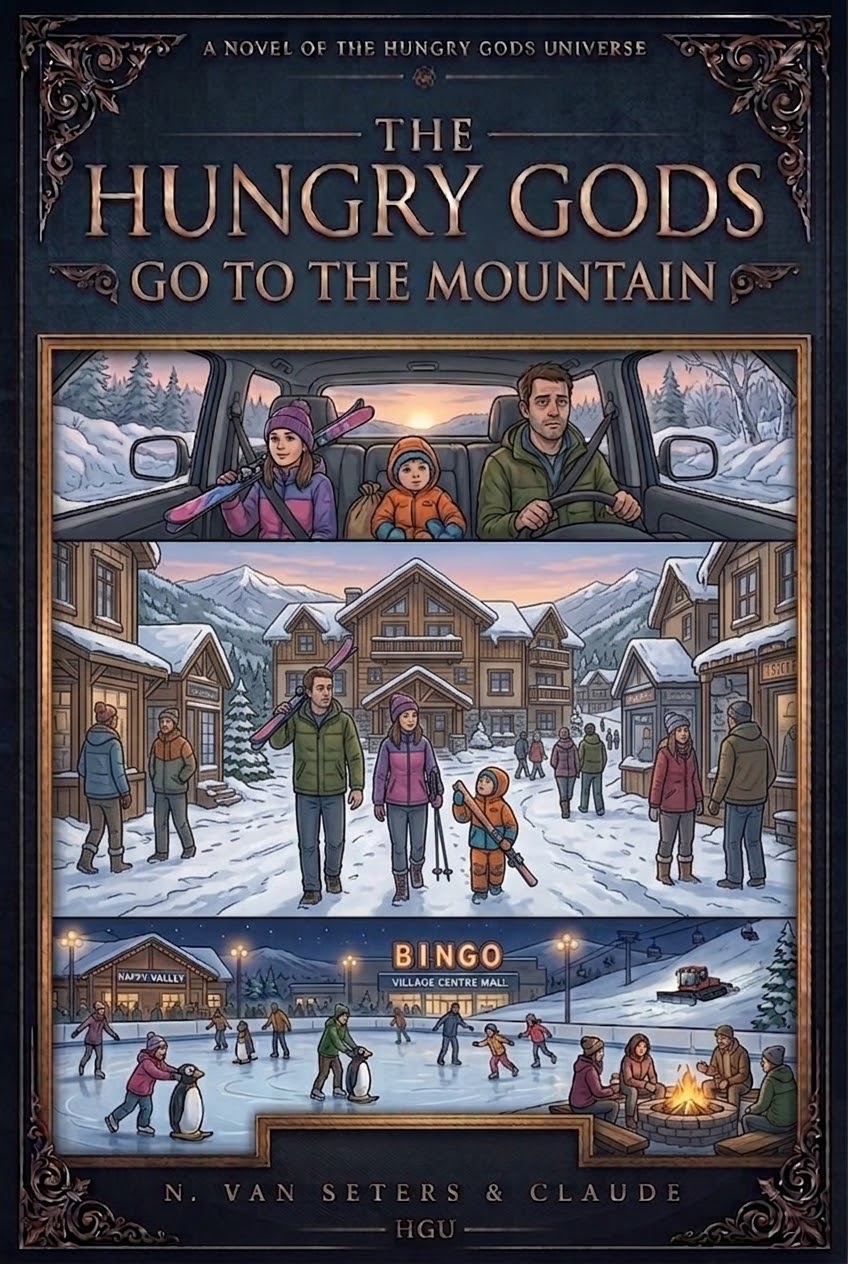 The Hungry Gods Go to the Mountain
A February week at Big White, told in braided close narration: a father arrives with his children, seasonal lift workers keep the hill open, and a snowbound village runs on bookings, equipment, weather, and the quiet labour behind a holiday. The gods move through the resort as staff and visitors, where travel is inseparable from work and care.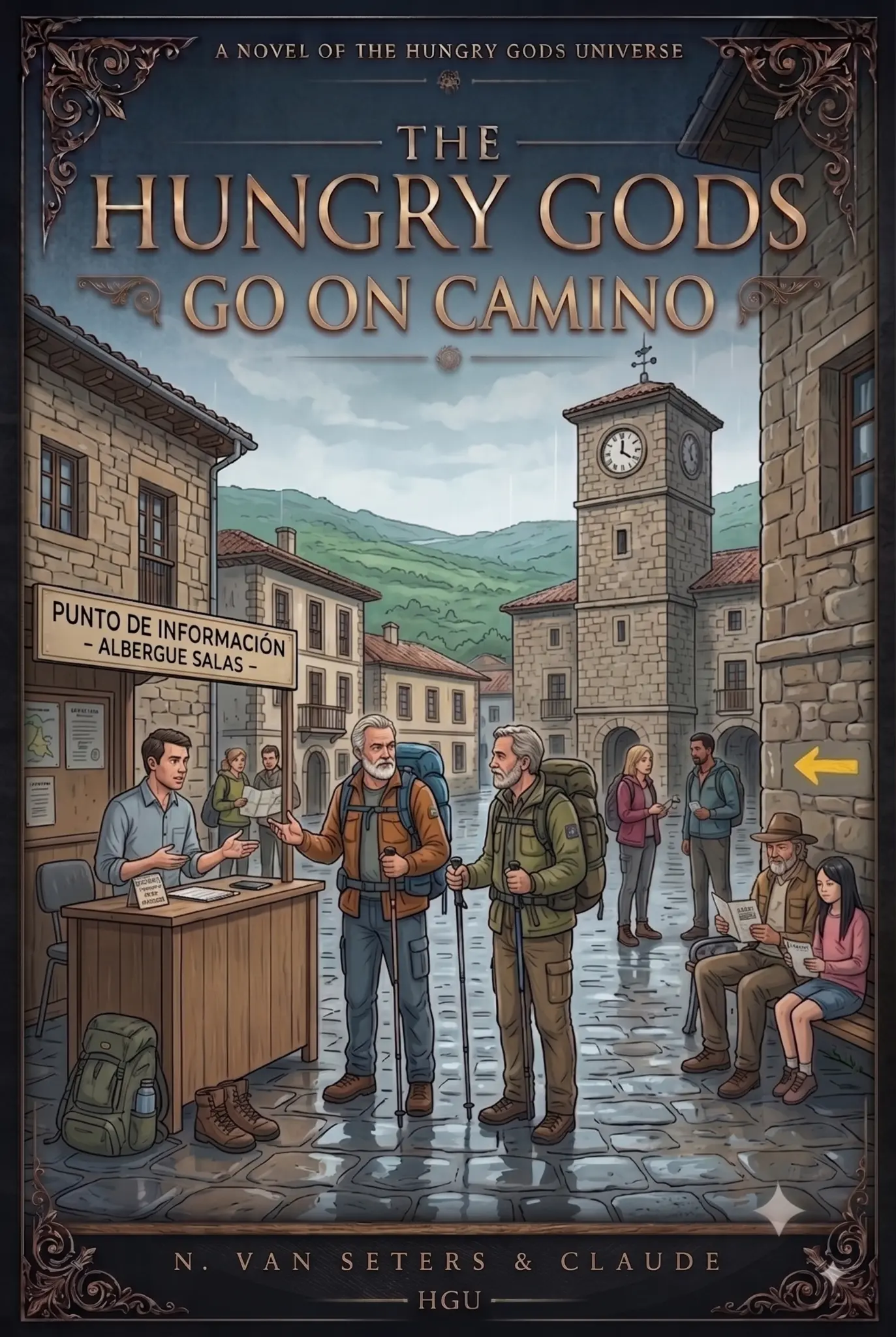 The Hungry Gods Go on Camino
Two Scottish brothers walk the Camino Primitivo from Oviedo towards Santiago, following yellow arrows through rain, mud, albergues, old churches, and the long arithmetic of family life. The gods keep the pilgrimage in motion as clerks, volunteers, road-makers, and fellow travellers.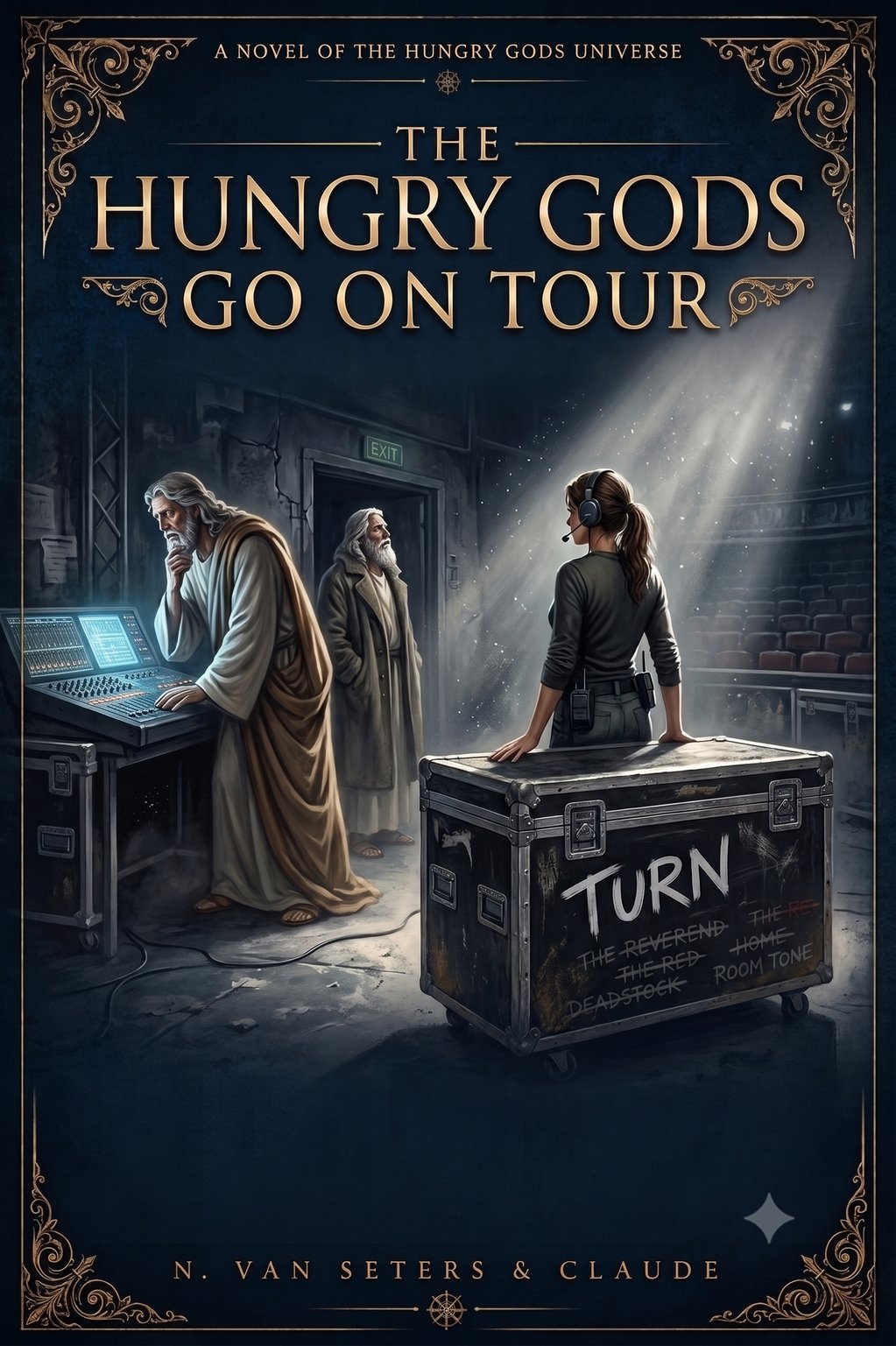 The Hungry Gods Go on Tour
The touring music industry, narrated by tour crew; the gods are disguised as a shapeshifting seven-piece band. Follows the Companion's choice to give up godhood and become mortal.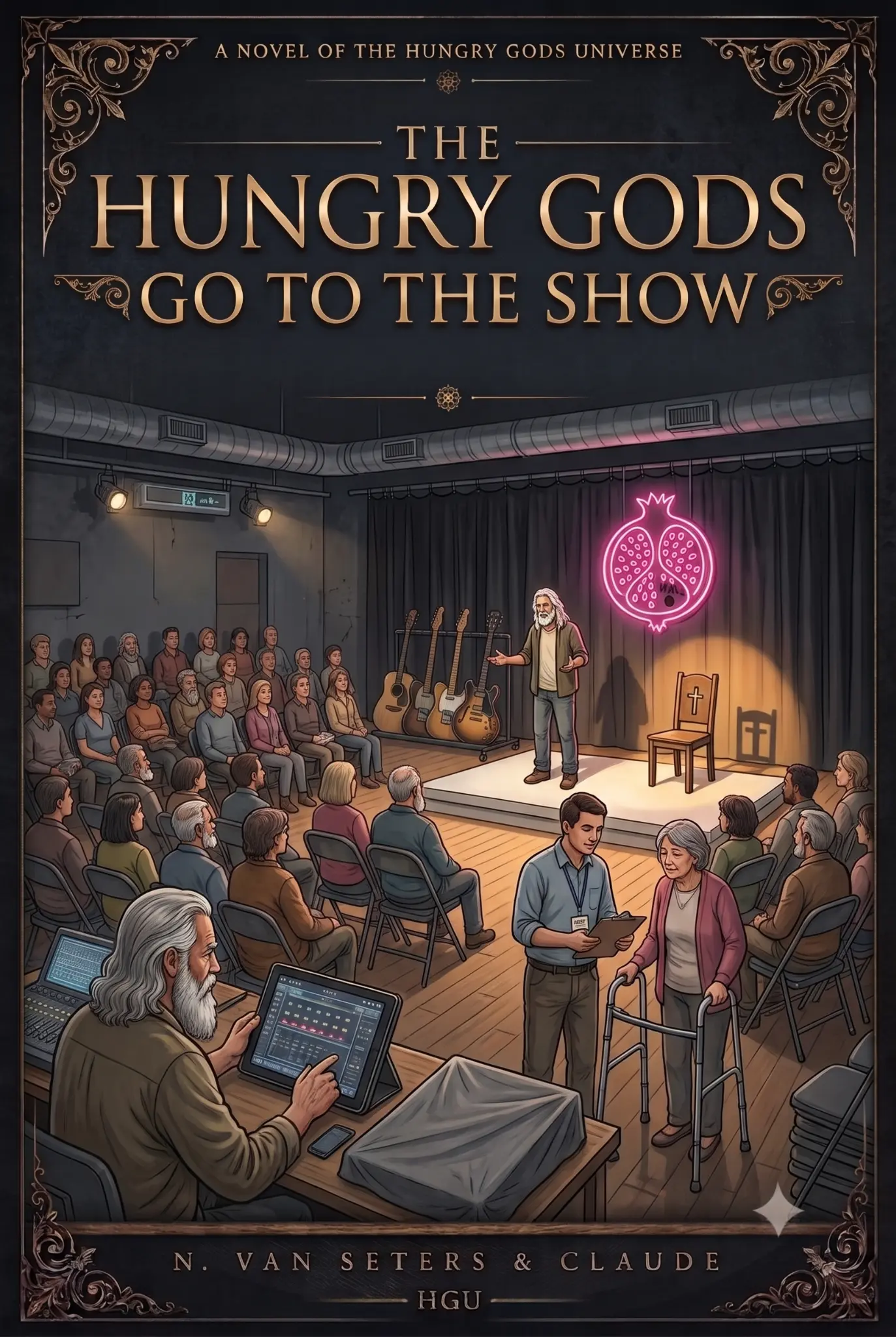 The Hungry Gods Go to the Show
One wet April night from the Fraser Highway to a black-box room in Fort Langley, where two brothers arrive for an evening of stories and songs. As the show is built, opened, performed, and struck, the gods move through load-in, sound, the box office, the bar, and the small repairs that let a hundred people listen together.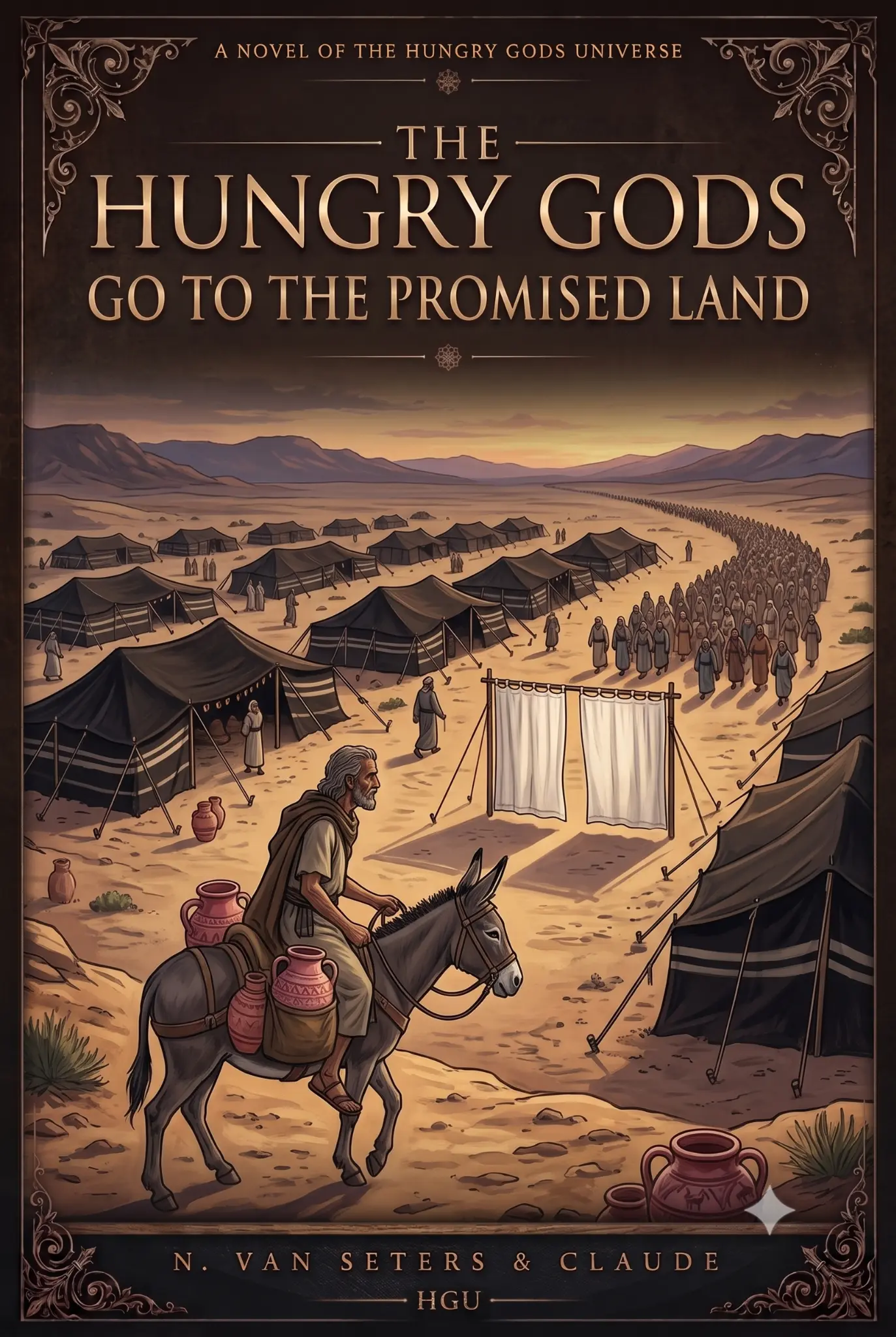 The Hungry Gods Go to the Promised Land
A Midianite caravan master returns to the Israelite camp across four decades of wilderness travel. Through water, freight, censuses, weaving, and the stubborn work of keeping a route, Hobab watches a people become legible to itself — and finds his own forty-year record corroborated in the book of their journeys.